


 Cart
Cart
 sales@molnova.com


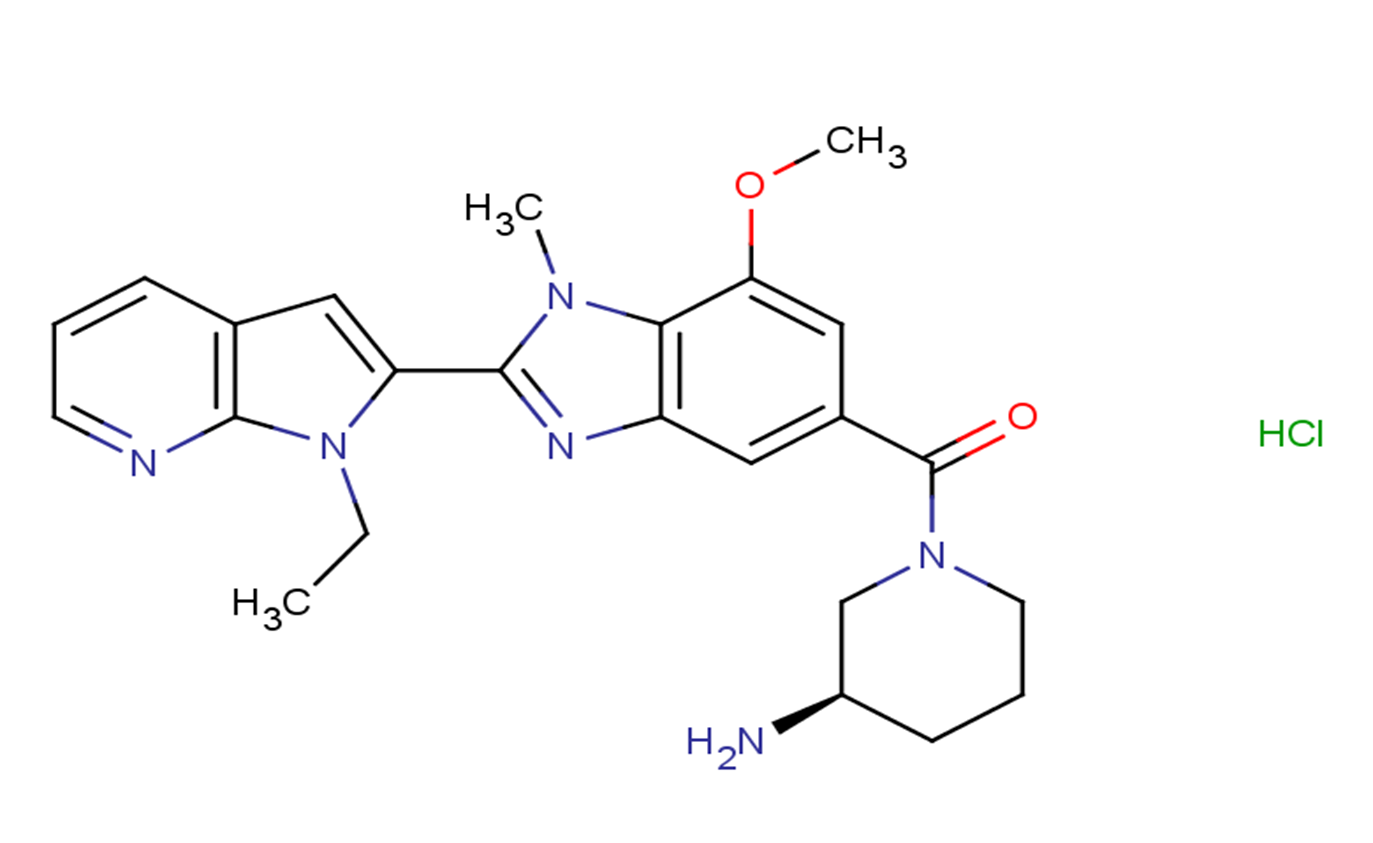
GSK199
CAS No. 1549811-53-1
GSK199( —— )
Catalog No. M23670 CAS No. 1549811-53-1
GSK199 is a selective PAD4 inhibitor(IC50 of 200 nM in the absence of calcium).
Purity : >98% (HPLC)
 COA
Datasheet
HNMR
HPLC
MSDS
Handing Instructions
COA
Datasheet
HNMR
HPLC
MSDS
Handing Instructions
| Size | Price / USD | Stock | Quantity |
| 1 mL x 10 mM in DMSO | 159 | In Stock |


|
| 5MG | 136 | In Stock |
|
| 10MG | 226 | In Stock |
|
| 25MG | 371 | In Stock |
|
| 50MG | 510 | In Stock |
|
| 100MG | 686 | In Stock |
|
| 200MG | 923 | In Stock |
|
| 500MG | Get Quote | In Stock |
|
| 1G | Get Quote | In Stock |
|
Biological Information
-
Product NameGSK199
-
NoteResearch use only, not for human use.
-
Brief DescriptionGSK199 is a selective PAD4 inhibitor(IC50 of 200 nM in the absence of calcium).
-
DescriptionGSK199 is a selective PAD4 inhibitor(IC50 of 200 nM in the absence of calcium).
-
In Vitro——
-
In Vivo——
-
Synonyms——
-
PathwayOthers
-
TargetOther Targets
-
RecptorPAD4
-
Research Area——
-
Indication——
Chemical Information
-
CAS Number1549811-53-1
-
Formula Weight469
-
Molecular FormulaC24H29ClN6O2?
-
Purity>98% (HPLC)
-
SolubilityDMSO:10 mM
-
SMILESCCN1C(=CC2=C1N=CC=C2)C3=NC4=C(N3C)C(=CC(=C4)C(=O)N5CCC[C@H](C5)N)OC.Cl
-
Chemical Name——
Shipping & Storage Information
-
Storage(-20℃)
-
ShippingWith Ice Pack
-
Stability≥ 2 years
Reference
1.Willis V C , Banda N K , Cordova K N , et al. Protein arginine deiminase 4 inhibition is sufficient for the amelioration of collagen-induced arthritis[J]. Clinical & Experimental Immunology, 2017.
molnova catalog



related products
-
Isolariciresinol
(+)-Isolariciresinol is extracted from Radix Isatidis and shows antioxidant and anti-inflammatory activities and can be used in studies about rheumatism.
-
Raddeanoside R16
Raddeanoside R16 is an oleanane-type saponin, that can be isolated from the rhizoma of Anemone raddeana.
-
5-O-Methylhierochin ...
5-O-Methylhierochin D is a natural product for research related to life sciences.
