


 Cart
Cart
 sales@molnova.com


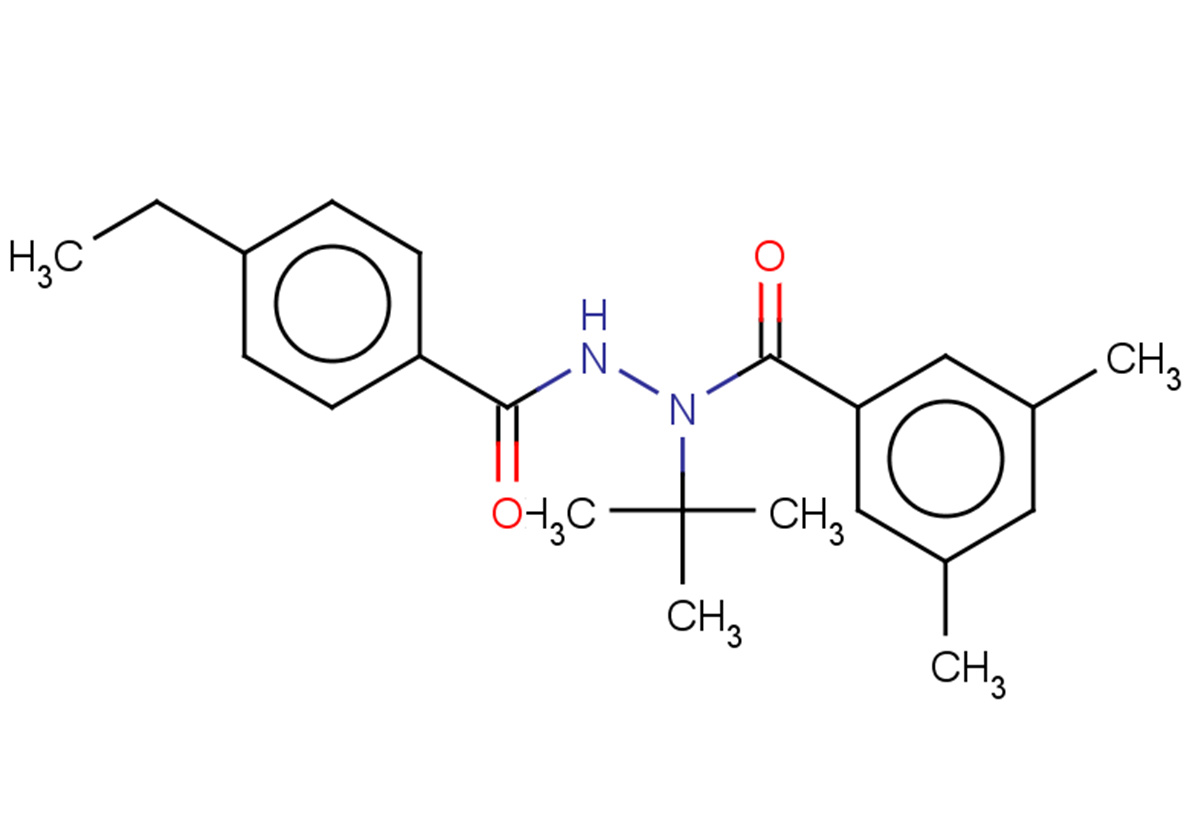
Tebufenozide
CAS No. 112410-23-8
Tebufenozide( —— )
Catalog No. M23317 CAS No. 112410-23-8
Tebufenozide is a novel nonsteroidal ecdysone agonist.
Purity : >98% (HPLC)
 COA
Datasheet
HNMR
HPLC
MSDS
Handing Instructions
COA
Datasheet
HNMR
HPLC
MSDS
Handing Instructions
| Size | Price / USD | Stock | Quantity |
| 1 mL x 10 mM in DMSO | 41 | In Stock |


|
| 25MG | 37 | In Stock |
|
| 50MG | 60 | In Stock |
|
| 100MG | 90 | In Stock |
|
| 200MG | 133 | In Stock |
|
| 500MG | 221 | In Stock |
|
| 1G | Get Quote | In Stock |
|
Biological Information
-
Product NameTebufenozide
-
NoteResearch use only, not for human use.
-
Brief DescriptionTebufenozide is a novel nonsteroidal ecdysone agonist.
-
DescriptionTebufenozide is a novel nonsteroidal ecdysone agonist. It shows good efficacy and playing an increasingly important role in the control of Lepidopteran pests.
-
In Vitro——
-
In Vivo——
-
Synonyms——
-
PathwayApoptosis
-
TargetApoptosis
-
RecptorApoptosis
-
Research Area——
-
Indication——
Chemical Information
-
CAS Number112410-23-8
-
Formula Weight352.48
-
Molecular FormulaC22H28N2O2
-
Purity>98% (HPLC)
-
SolubilityDMSO:125 mg/mL (354.64 mM; Need ultrasonic)
-
SMILESCCc(cc1)ccc1C(NN(C(C)(C)C)C(c1cc(C)cc(C)c1)=O)=O
-
Chemical Name——
Shipping & Storage Information
-
Storage(-20℃)
-
ShippingWith Ice Pack
-
Stability≥ 2 years
Reference
1.Yun-Sik L , Sung-Eun L , Jino S , et al. Toxicity effects and biomarkers of tebufenozide exposure in Yuukianura szeptyckii (Collembola: Neanuridae)[J]. Environmental Geochemistry & Health, 2018:1-12.
molnova catalog



related products
-
Anticancer agent 110
Anticancer Agent 110 exhibits potent in vitro anti-leukemia activity, demonstrating high cytotoxicity against K-562 lineage chronic myelogenous leukemia cells at nanomolar concentrations.
-
Voreloxin hydrochlor...
Voreloxin hydrochloride is a potent inhibitor of Topoisomerase II with broad-spectrum anti-tumor activity.
-
icFSP1
icFSP1 is a mitochondria-associated apoptosis-inducing factor regulator with antitumor activity for the study and treatment of tumor diseases.
