


 Cart
Cart
 sales@molnova.com


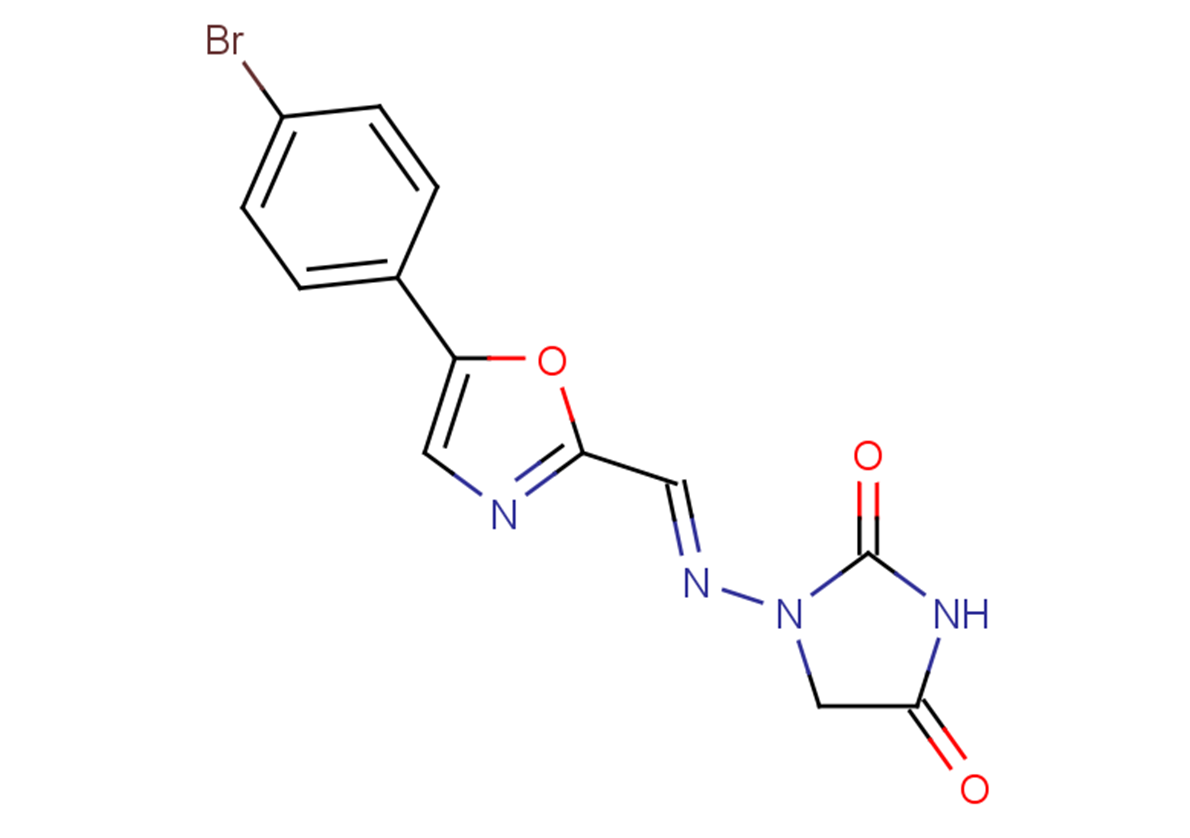
Azumolene
CAS No. 64748-79-4
Azumolene( EU4093 free base )
Catalog No. M22989 CAS No. 64748-79-4
Azumolene1.EU4093 (azumolene sodium) is a direct acting, skeletal muscle relaxant with structural similarities to dantrolene sodium in that the para-nitro phenyl group of dantrolene sodium is replaced by a para-bromo phenyl group. 2. The effect of EU4093 on the twitch of the intact rat soleus preparation is nearly maximal at a dose of 20 mg kg-1.
Purity : >98% (HPLC)
 COA
Datasheet
HNMR
HPLC
MSDS
Handing Instructions
COA
Datasheet
HNMR
HPLC
MSDS
Handing Instructions
| Size | Price / USD | Stock | Quantity |
| 1 mL x 10 mM in DMSO | 71 | In Stock |


|
| 2MG | 40 | In Stock |
|
| 5MG | 64 | In Stock |
|
| 10MG | 112 | In Stock |
|
| 25MG | 235 | In Stock |
|
| 50MG | 365 | In Stock |
|
| 100MG | 551 | In Stock |
|
| 200MG | Get Quote | In Stock |
|
| 500MG | 1190 | In Stock |
|
| 1G | Get Quote | In Stock |
|
Biological Information
-
Product NameAzumolene
-
NoteResearch use only, not for human use.
-
Brief DescriptionAzumolene1.EU4093 (azumolene sodium) is a direct acting, skeletal muscle relaxant with structural similarities to dantrolene sodium in that the para-nitro phenyl group of dantrolene sodium is replaced by a para-bromo phenyl group. 2. The effect of EU4093 on the twitch of the intact rat soleus preparation is nearly maximal at a dose of 20 mg kg-1.
-
DescriptionAzumolene1.EU4093 (azumolene sodium) is a direct acting, skeletal muscle relaxant with structural similarities to dantrolene sodium in that the para-nitro phenyl group of dantrolene sodium is replaced by a para-bromo phenyl group. 2. The effect of EU4093 on the twitch of the intact rat soleus preparation is nearly maximal at a dose of 20 mg kg-1. This dose of EU4093 reduces the amplitude of the twitch to 31.9% of the control value. By comparison, dantrolene sodium reduced the twitch amplitude to 31.3% of the control value at a dose of 5 mg kg-1. 3. The contraction of intrafusal muscle as measured by the response of spindle afferent discharge was also reduced by EU4093. 4. The most significant difference between the effect of EU4093 and dantrolene sodium on the contraction of intrafusal muscle was that EU4093 had an appreciable depressant action at high stimulation frequencies at which dantrolene sodium had only a minimal relaxant effect on the intrafusal muscle contraction.
-
In VitroPretreatment with 20 μM Azumolene for 1-2 min inhibits SOCE activated by subsequent addition of caffeine and ryanodine to promote RyR-dependent sarcoplasmic reticulum Ca2+ store depletion in mouse myotubes and adult muscle fibers.
-
In VivoThe effect of Azumolene (EU4093) on the twitch of the intact rat soleus preparation is nearly maximal at a dose of 20 mg/kg. This dose of Azumolene reduces the amplitude of the twitch to 31.9% of the control value. The contraction of intrafusal muscle as measured by the response of spindle afferent discharge is also reduced by Azumolene.
-
SynonymsEU4093 free base
-
PathwayGPCR/G Protein
-
TargetCalcium Channel
-
RecptorCalcium Channel
-
Research Area——
-
Indication——
Chemical Information
-
CAS Number64748-79-4
-
Formula Weight349.14
-
Molecular FormulaC13H9BrN4O3
-
Purity>98% (HPLC)
-
SolubilityDMSO:13.89 mg/mL (39.78 mM; Need ultrasonic)
-
SMILESO=C1NC(CN1/N=C/C2=NC=C(C3=CC=C(Br)C=C3)O2)=O
-
Chemical Name——
Shipping & Storage Information
-
Storage(-20℃)
-
ShippingWith Ice Pack
-
Stability≥ 2 years
Reference
molnova catalog



related products
-
Sipatrigine
Sipatrigine (619C89) is an antiepileptic compound with neuroprotective activity through glutamate release, TREK ion channels, TRESK channels, sodium channels, and calcium channel inhibitors in the CNS, and can be used to study TRESK channels.
-
Calcium Channel anta...
Calcium Channel antagonist 4 is a voltage-gated calcium channel inhibitor (IC50 : 5-20 μM).
-
O-1602
O-1602 is a novel GPR55 agonist, an atypical cannabinoid associated with the central nervous system and obesity, and is a candidate compound for the treatment of cystitis.
