


 Cart
Cart
 sales@molnova.com


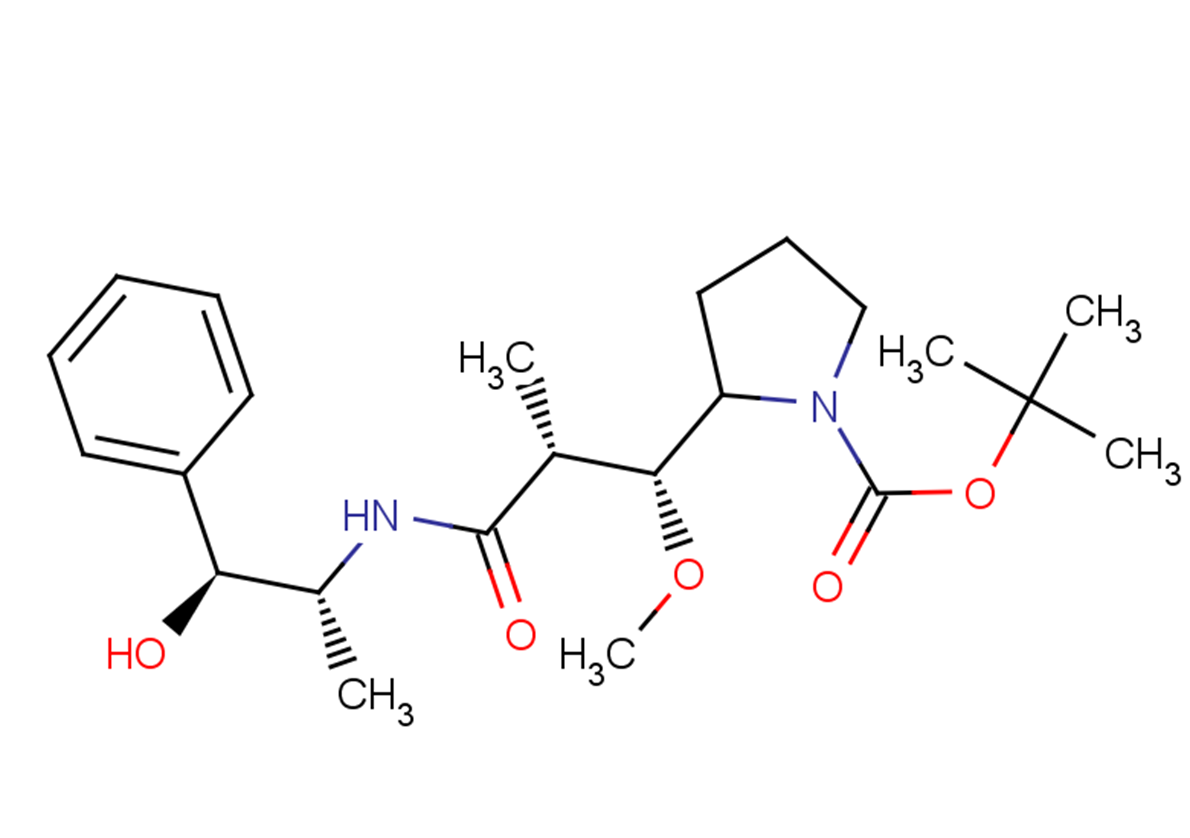
BOC-Dap-NE
CAS No. 160800-65-7
BOC-Dap-NE( —— )
Catalog No. M22950 CAS No. 160800-65-7
Boc-Dap-NE used in the synthesis of antibody-drug conjugates (ADCs).It is a cleavable ADC linker.
Purity : >98% (HPLC)
 COA
Datasheet
HNMR
HPLC
MSDS
Handing Instructions
COA
Datasheet
HNMR
HPLC
MSDS
Handing Instructions
| Size | Price / USD | Stock | Quantity |
| 1 mL x 10 mM in DMSO | 29 | In Stock |


|
| 25MG | 29 | In Stock |
|
| 50MG | 45 | In Stock |
|
| 100MG | 68 | In Stock |
|
| 200MG | Get Quote | In Stock |
|
| 500MG | Get Quote | In Stock |
|
| 1G | Get Quote | In Stock |
|
Biological Information
-
Product NameBOC-Dap-NE
-
NoteResearch use only, not for human use.
-
Brief DescriptionBoc-Dap-NE used in the synthesis of antibody-drug conjugates (ADCs).It is a cleavable ADC linker.
-
DescriptionBoc-Dap-NE used in the synthesis of antibody-drug conjugates (ADCs).It is a cleavable ADC linker.
-
In Vitro——
-
In Vivo——
-
Synonyms——
-
PathwayOthers
-
TargetOther Targets
-
RecptorOthers
-
Research Area——
-
Indication——
Chemical Information
-
CAS Number160800-65-7
-
Formula Weight420.5
-
Molecular FormulaC23H36N2O5
-
Purity>98% (HPLC)
-
Solubility——
-
SMILESO=C(N1[C@@H](CCC1)[C@@H]([C@@H](C)C(N[C@H](C)[C@@H](O)C2=CC=CC=C2)=O)OC)OC(C)(C)C
-
Chemical Name——
Shipping & Storage Information
-
Storage(-20℃)
-
ShippingWith Ice Pack
-
Stability≥ 2 years
Reference
molnova catalog



related products
-
Cordifolioside A
Cordifolioside A possesses immunomodulatory activity, it has a potential in vivo radioprotective effect as well as in vitro cytoprotective activity.
-
AZD3759 hydrochlorid...
AZD3759 (hydrochloride) is an effective, orally active and central nervous system-penetrant?EGFR?inhibitor.
-
Brassinazole B
Brassinazole is a selective inhibitor of triazole-type steroid (BR) biosynthesis.Brassinazole can be used to modulate the oleuropein steroid (BR) signaling pathway, which is used to regulate plant xylem growth and development.
