


 Cart
Cart
 sales@molnova.com


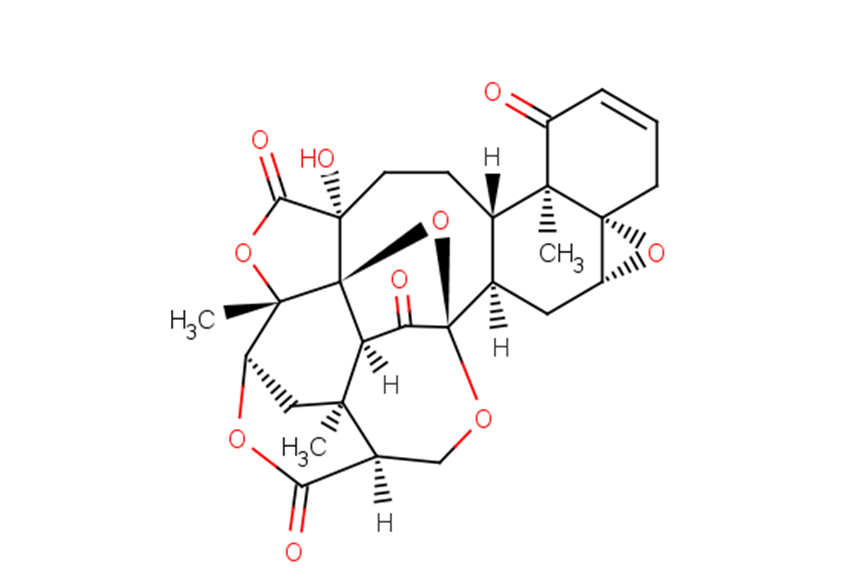
physalin F
CAS No. 57423-71-9
physalin F( —— )
Catalog No. M22596 CAS No. 57423-71-9
Physalin F is a natural blocker of CaV2.3 (R-type) and CaV2.2 (N-type) voltage-gated calcium channels.It is a secosteroid with potent anti-inflammatory and immunomodulatory activities.
Purity : >98% (HPLC)
 COA
Datasheet
HNMR
HPLC
MSDS
Handing Instructions
COA
Datasheet
HNMR
HPLC
MSDS
Handing Instructions
| Size | Price / USD | Stock | Quantity |
| 1 mL x 10 mM in DMSO | 116 | In Stock |


|
| 5MG | 85 | In Stock |
|
| 10MG | 123 | In Stock |
|
| 25MG | 208 | In Stock |
|
| 50MG | 303 | In Stock |
|
| 100MG | 451 | In Stock |
|
| 200MG | Get Quote | In Stock |
|
| 500MG | Get Quote | In Stock |
|
| 1G | Get Quote | In Stock |
|
Biological Information
-
Product Namephysalin F
-
NoteResearch use only, not for human use.
-
Brief DescriptionPhysalin F is a natural blocker of CaV2.3 (R-type) and CaV2.2 (N-type) voltage-gated calcium channels.It is a secosteroid with potent anti-inflammatory and immunomodulatory activities.
-
DescriptionPhysalin F is a natural blocker of CaV2.3 (R-type) and CaV2.2 (N-type) voltage-gated calcium channels.It is a secosteroid with potent anti-inflammatory and immunomodulatory activities. Physalin F induces apoptosis of PBMC, decreasing the spontaneous proliferation and cytokine production caused by Human T-lymphotropic virus type 1 (HTLV-1) infectionPhysalin F is a secosteroid with potent anti-inflammatory and immunomodulatory activities. A concentration-dependent inhibition of spontaneous proliferation of PBMC from HAM/TSP subjects was observed in the presence of physalin F, as evaluated by (3)H-thymidine uptake. The IC50 for physalin F was 0.97 0.11 μM. Flow cytometry analysis using Cytometric Bead Array (CBA) showed that physalin F (10 μM) significantly reduced the levels of IL-2, IL-6, IL-10, TNF-α and IFN-γ, but not IL-17A, in supernatants of PBMC cultures. Next, apoptosis induction was addressed by using flow cytometry to evaluate annexin V expression. Treatment with physalin F (10 μM) increased the apoptotic population of PBMC in HAM/TSP subjects. Transmission electron microscopy analysis of PBMC showed that physalin F induced ultrastructural changes, such as pyknotic nuclei, damaged mitochondria, enhanced autophagic vacuole formation, and the presence of myelin-like figures. In conclusion, physalin F induces apoptosis of PBMC, decreasing the spontaneous proliferation and cytokine production caused by HTLV-1 infection.
-
In VitroPhysalin F is a seco-steroid from Physalis angulate L..
-
In Vivo——
-
Synonyms——
-
PathwayApoptosis
-
TargetApoptosis
-
RecptorApoptosis
-
Research Area——
-
Indication——
Chemical Information
-
CAS Number57423-71-9
-
Formula Weight526.5
-
Molecular FormulaC28H30O10?
-
Purity>98% (HPLC)
-
Solubility——
-
SMILES[H][C@@]12C(=O)[C@]34O[C@]11[C@@](C)(OC(=O)[C@@]1(O)CC[C@@]1([H])[C@@]3([H])C[C@H]3O[C@]33CC=CC(=O)[C@]13C)[C@H]1C[C@]2(C)[C@@]([H])(CO4)C(=O)O1
-
Chemical Name——
Shipping & Storage Information
-
Storage(-20℃)
-
ShippingWith Ice Pack
-
Stability≥ 2 years
Reference
1. Pinto L A , Meira, Cássio S, Villarreal C F , et al. Physalin F, a seco-steroid from Physalis angulata L. has immunosuppressive activity in peripheral blood mononuclear cells from patients with HTLV1-associated myelopathy[J]. Biomedicine & Pharmacotherapy, 2016, 79:129-134.
molnova catalog



related products
-
ZDLD20
ZDLD20 is an orally active and selective CDK4 inhibitor, a β-carboline analog with anti-HCT116 and anticancer activity that inhibits colony formation, inhibits invasion and migration, induces apoptosis, and prevents the G1 phase of the cell cycle.
-
SKI-178
SKI-178 is a sphingosine kinase 1 (SphK1) inhibitor with IC50 of 0.1-1.8 μM.?
-
EC359
EC359 is a potent and selective inhibitor of leukemia inhibitory factor receptor (LIFR), a potent inhibitor with anticancer activity, blocks LIF/LIFR interaction, and can be used in the study of leukemia and endometrial cancer.
