


 Cart
Cart
 sales@molnova.com


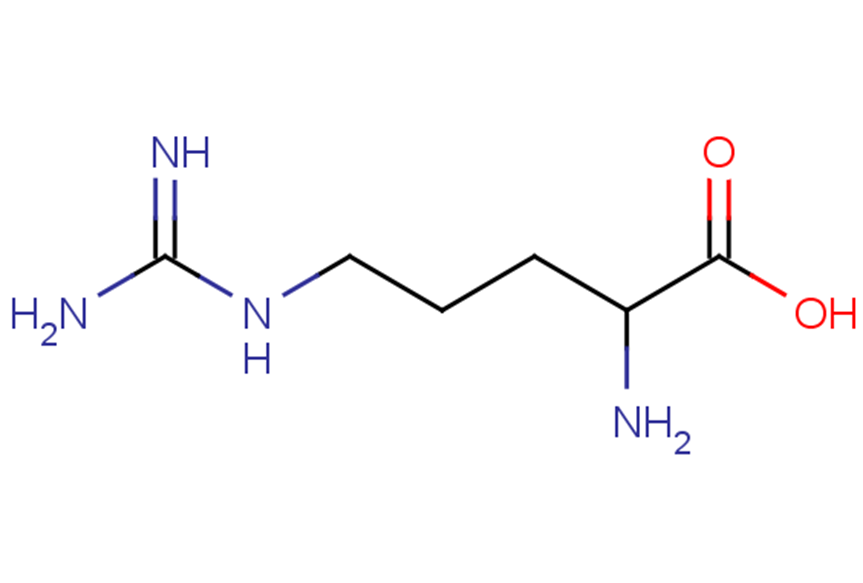
DL-Arginine
CAS No. 7200-25-1
DL-Arginine( —— )
Catalog No. M22485 CAS No. 7200-25-1
DL-Arginine is used in analysis of amino acid complexation dynamics and crystal structure formations.
Purity : >98% (HPLC)
 COA
Datasheet
HNMR
HPLC
MSDS
Handing Instructions
COA
Datasheet
HNMR
HPLC
MSDS
Handing Instructions
| Size | Price / USD | Stock | Quantity |
| 100MG | Get Quote | In Stock |


|
| 200MG | Get Quote | In Stock |
|
| 500MG | 37 | In Stock |
|
| 1G | 52 | In Stock |
|
Biological Information
-
Product NameDL-Arginine
-
NoteResearch use only, not for human use.
-
Brief DescriptionDL-Arginine is used in analysis of amino acid complexation dynamics and crystal structure formations.
-
DescriptionDL-Arginine is used in analysis of amino acid complexation dynamics and crystal structure formations.
-
In Vitro——
-
In Vivo——
-
Synonyms——
-
PathwayOthers
-
TargetOther Targets
-
RecptorOthers
-
Research Area——
-
Indication——
Chemical Information
-
CAS Number7200-25-1
-
Formula Weight174.2
-
Molecular FormulaC6H14N4O2
-
Purity>98% (HPLC)
-
SolubilityH2O:150 mg/mL (861.08 mM)
-
SMILESNC(CCCNC(N)=N)C(O)=O
-
Chemical Name——
Shipping & Storage Information
-
Storage(-20℃)
-
ShippingWith Ice Pack
-
Stability≥ 2 years
Reference
molnova catalog



related products
-
Bimolane
Bimolane is a topoisomerase II inhibitor.
-
N-Acetyl-D-galactosa...
N-Acetyl-d-galactosamine (GalNAc) is a terminal essential amino sugar derived from galactose and forms the antigens of blood group A in humans.
-
Berberrubine
Berberrubine has antitumor activity. Berberrubine dose-dependently inhibits IL-8 and MCP-1 protein levels in the media and mRNA expression of the cells stimulated with IL-1beta or TNF-alpha.
