


 Cart
Cart
 sales@molnova.com


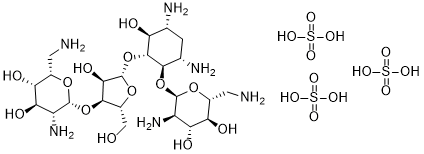
Fradiomycin
CAS No. 1404-04-2
Fradiomycin( —— )
Catalog No. M21847 CAS No. 1404-04-2
Fradiomycin or neomycin, an aminoglycoside antibiotic, is first isolated in 1949 from the gram-positive bacillus Streptomyces fradiae.
Purity : >98% (HPLC)
 COA
Datasheet
HNMR
HPLC
MSDS
Handing Instructions
COA
Datasheet
HNMR
HPLC
MSDS
Handing Instructions
| Size | Price / USD | Stock | Quantity |
| 5MG | 873 | In Stock |


|
| 50MG | 1782 | In Stock |
|
| 100MG | 2250 | In Stock |
|
| 200MG | Get Quote | In Stock |
|
| 500MG | Get Quote | In Stock |
|
| 1G | Get Quote | In Stock |
|
Biological Information
-
Product NameFradiomycin
-
NoteResearch use only, not for human use.
-
Brief DescriptionFradiomycin or neomycin, an aminoglycoside antibiotic, is first isolated in 1949 from the gram-positive bacillus Streptomyces fradiae.
-
DescriptionFradiomycin or neomycin, an aminoglycoside antibiotic, is first isolated in 1949 from the gram-positive bacillus Streptomyces fradiae. It consists of a mixture of two isomers, fradiomycin B and fradiomycin C. Fradiomycin has broad activity against Gram-negative bacteria except Pseudomonas aeruginosa and Gram-positive bacteria. It binds with bacterium ribosome 30s, and then it inhibits bacterial growth by inhibiting protein synthesis.
-
In Vitro——
-
In Vivo——
-
Synonyms——
-
PathwayOthers
-
TargetOther Targets
-
Recptor——
-
Research Area——
-
Indication——
Chemical Information
-
CAS Number1404-04-2
-
Formula Weight614.64
-
Molecular FormulaC23H46N6O13
-
Purity>98% (HPLC)
-
Solubility——
-
SMILESO[C@H]1[C@H](O)[C@@H](N)[C@@H](O[C@@H]2[C@@H](N)C[C@@H](N)[C@H](O)[C@H]2O[C@@H]3O[C@H](CO)[C@@H](O[C@H]4O[C@@H](CN)[C@@H](O)[C@H](O)[C@H]4N)[C@H]3O)O[C@@H]1CN
-
Chemical Name——
Shipping & Storage Information
-
Storage(-20℃)
-
ShippingWith Ice Pack
-
Stability≥ 2 years
Reference
molnova catalog



related products
-
Sequoyitol
Sequoyitol, a methyl derivative of inositol, is often used to treat diabetes.
-
4-Hepten-3-one, 1,7-...
4-Hepten-3-one, 1,7-diphenyl-, (4E)-
-
Ethyl Vanillate
Ethylvanillin are used by the food industry; ethylvanillin is more expensive, but has a stronger note.
