


 Cart
Cart
 sales@molnova.com


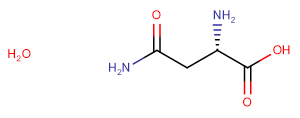
L(+)-Asparagine monohydrate
CAS No. 5794-13-8
L(+)-Asparagine monohydrate( —— )
Catalog No. M21607 CAS No. 5794-13-8
L(+)-Asparagine monohydrate is a non-essential amino acid participate in neurological and metabolic regulation of tissue cell function.
Purity : >98% (HPLC)
 COA
Datasheet
HNMR
HPLC
MSDS
Handing Instructions
COA
Datasheet
HNMR
HPLC
MSDS
Handing Instructions
| Size | Price / USD | Stock | Quantity |
| 100MG | Get Quote | In Stock |


|
| 200MG | Get Quote | In Stock |
|
| 500MG | Get Quote | In Stock |
|
| 1G | 88 | In Stock |
|
Biological Information
-
Product NameL(+)-Asparagine monohydrate
-
NoteResearch use only, not for human use.
-
Brief DescriptionL(+)-Asparagine monohydrate is a non-essential amino acid participate in neurological and metabolic regulation of tissue cell function.
-
DescriptionL(+)-Asparagine monohydrate is a non-essential amino acid participate in neurological and metabolic regulation of tissue cell function.
-
In Vitro——
-
In Vivo——
-
Synonyms——
-
PathwayProteasome/Ubiquitin
-
TargetEndogenous Metabolite
-
RecptorHuman Endogenous Metabolite
-
Research Area——
-
Indication——
Chemical Information
-
CAS Number5794-13-8
-
Formula Weight150.13
-
Molecular FormulaC4H10N2O4
-
Purity>98% (HPLC)
-
SolubilityIn Vitro:?H2O : 20 mg/mL (133.22 mM)
-
SMILESO.N[C@@H](CC(N)=O)C(O)=O
-
Chemical Name——
Shipping & Storage Information
-
Storage(-20℃)
-
ShippingWith Ice Pack
-
Stability≥ 2 years
Reference
1.Christie B D Rapoport H . ChemInform Abstract: SYNTHESIS OF OPTICALLY PURE PIPECOLATES FROM L-ASPARAGINE. APPLICATION TO THE TOTAL SYNTHESIS OF (+)-APOVINCAMINE THROUGH AMINO ACID DECARBONYLATION AND IMINIUM ION CYCLIZATION[J]. Chemischer Informationsdienst 1985 16(35).
molnova catalog



related products
-
Nervonic acid
Nervonic acid is a long chain unsaturated fatty acid that is enriched in sphingomyelin. It consists of choline sphingosine phosphoric acid and fatty acid.
-
Glycogen
Glycogen is a glycolytic intermediate and high-energy phosphate that ACTS as a form of energy storage for humans, animals, fungi and bacteria.
-
N1-Acetylspermidine ...
N1-Acetylspermidine hydrochloride, an acetyl derivative of spermidine, serves as a substrate for polyamine oxidase and selectively elevates its levels in human colorectal adenocarcinomas.
