


 Cart
Cart
 sales@molnova.com


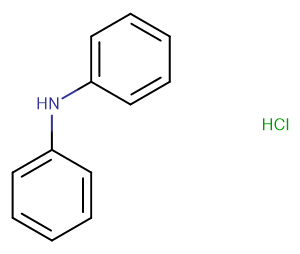
Diphenylamine Hydrochloride
CAS No. 537-67-7
Diphenylamine Hydrochloride( —— )
Catalog No. M21556 CAS No. 537-67-7
Diphenylamine Hydrochloride is a natural product that used mainly for its antioxidant properties.
Purity : >98% (HPLC)
 COA
Datasheet
HNMR
HPLC
MSDS
Handing Instructions
COA
Datasheet
HNMR
HPLC
MSDS
Handing Instructions
| Size | Price / USD | Stock | Quantity |
| 1 mL x 10 mM in DMSO | 28 | In Stock |


|
| 100MG | Get Quote | In Stock |
|
| 200MG | Get Quote | In Stock |
|
| 500MG | Get Quote | In Stock |
|
| 1G | 27 | In Stock |
|
Biological Information
-
Product NameDiphenylamine Hydrochloride
-
NoteResearch use only, not for human use.
-
Brief DescriptionDiphenylamine Hydrochloride is a natural product that used mainly for its antioxidant properties.
-
DescriptionDiphenylamine Hydrochloride is a natural product that used mainly for its antioxidant properties.
-
In Vitro——
-
In Vivo——
-
Synonyms——
-
PathwayOthers
-
TargetOther Targets
-
RecptorOthers
-
Research Area——
-
Indication——
Chemical Information
-
CAS Number537-67-7
-
Formula Weight205.68
-
Molecular FormulaC12H12ClN
-
Purity>98% (HPLC)
-
SolubilityDMSO:41 mg/mL (199.33 mM)
-
SMILESC1=CC=C(C=C1)NC2=CC=CC=C2.Cl
-
Chemical Name——
Shipping & Storage Information
-
Storage(-20℃)
-
ShippingWith Ice Pack
-
Stability≥ 2 years
Reference
1.Safe S Hutzinger O Crocker J F S et al. Identification of toxic impurities in commercial Diphenylamine[J]. Bulletin of Environmental Contamination and Toxicology 1977 17(2):204-207.
molnova catalog



related products
-
DL-Tryptophan
Tryptophan containing dipeptides are interesting ingredients for functional foods as a natural prevention for hypertension with reduced side effects due to its selective inhibition of the C-domain.
-
7-Bromo-2,4-diaminoq...
7-Bromo-2, 4-diaminoquinazoline is an active biochemical.
-
Orthosiphol A
Orthosiphol A is a natural product for research related to life sciences.
