


 Cart
Cart
 sales@molnova.com


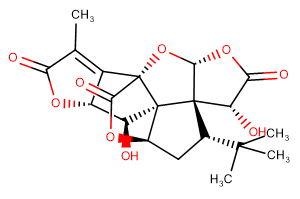
Ginkgolide K
CAS No. 153355-70-5
Ginkgolide K( —— )
Catalog No. M21487 CAS No. 153355-70-5
Ginkgolide K induces protective autophagy through the AMPK/mTOR/ULK1 signalling pathway. It possesses neuroprotective activity.
Purity : >98% (HPLC)
 COA
Datasheet
HNMR
HPLC
MSDS
Handing Instructions
COA
Datasheet
HNMR
HPLC
MSDS
Handing Instructions
| Size | Price / USD | Stock | Quantity |
| 1 mL x 10 mM in DMSO | 105 | In Stock |


|
| 5MG | 76 | In Stock |
|
| 100MG | Get Quote | In Stock |
|
| 200MG | Get Quote | In Stock |
|
| 500MG | Get Quote | In Stock |
|
| 1G | Get Quote | In Stock |
|
Biological Information
-
Product NameGinkgolide K
-
NoteResearch use only, not for human use.
-
Brief DescriptionGinkgolide K induces protective autophagy through the AMPK/mTOR/ULK1 signalling pathway. It possesses neuroprotective activity.
-
DescriptionGinkgolide K induces protective autophagy through the AMPK/mTOR/ULK1 signalling pathway. It possesses neuroprotective activity.
-
In Vitro——
-
In Vivo——
-
Synonyms——
-
PathwayAutophagy
-
TargetAutophagy
-
RecptorAutophagy
-
Research Area——
-
Indication——
Chemical Information
-
CAS Number153355-70-5
-
Formula Weight406.4
-
Molecular FormulaC20H22O9
-
Purity>98% (HPLC)
-
SolubilityIn Vitro:?DMSO : 50 mg/mL (123.04 mM)
-
SMILESCC1=C2[C@H]([C@@H]([C@@]34[C@@]25C(=O)O[C@@H]3C[C@H]([C@@]46[C@H](C(=O)O[C@H]6O5)O)C(C)(C)C)O)OC1=O
-
Chemical Name——
Shipping & Storage Information
-
Storage(-20℃)
-
ShippingWith Ice Pack
-
Stability≥ 2 years
Reference
1.Zhang Y et al. Ginkgolide K promotes astrocyte proliferation and migration after oxygen-glucose deprivation via inducing protective autophagy through the AMPK/mTOR/ULK1 signaling pathway. Eur J Pharmacol. 2018 Aug 5;832:96-103.
molnova catalog



related products
-
CP-312
CP-312 (Cardioprotectant 312) is an antioxidant defense response activator that protects hiPSC-CM viability by acting through induction of heme oxygenase-1 and targeting the antioxidant response network by inducing HMOX1 expression.
-
PHY34
PHY34 is a potent autophagy inhibitor with cytotoxic effects by inhibiting autophagy at a late stage (MDA-MB-435 IC50=23 nM, MDA-MB-231 IC50=5.2 nM); disrupts lysosomal function, significantly inhibits the growth of cancer cell lines in hollow fibers.
-
SJFα
SJFα (SJF alpha) is a PROTAC formed by an E3 ubiquitin ligase-conjugated protein hydrolysis regulator that degrades p38α and p38δ and can be used in cancer research.
