


 Cart
Cart
 sales@molnova.com


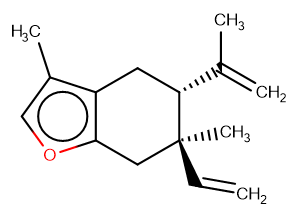
Curzerene
CAS No. 17910-09-7
Curzerene( —— )
Catalog No. M21444 CAS No. 17910-09-7
Curzerene is a sesquiterpene is isolated from the rhizome of Curculigo orchioides Gaertn with anti-cancer activity. Curzerene induces cell apoptosis[1].Curzerene inhibits glutathione S-transferase A1 (GSTA1) mRNA and protein expression.
Purity : >98% (HPLC)
 COA
Datasheet
HNMR
HPLC
MSDS
Handing Instructions
COA
Datasheet
HNMR
HPLC
MSDS
Handing Instructions
| Size | Price / USD | Stock | Quantity |
| 5MG | 93 | In Stock |


|
| 10MG | 141 | In Stock |
|
| 100MG | Get Quote | In Stock |
|
| 200MG | Get Quote | In Stock |
|
| 500MG | Get Quote | In Stock |
|
| 1G | Get Quote | In Stock |
|
Biological Information
-
Product NameCurzerene
-
NoteResearch use only, not for human use.
-
Brief DescriptionCurzerene is a sesquiterpene is isolated from the rhizome of Curculigo orchioides Gaertn with anti-cancer activity. Curzerene induces cell apoptosis[1].Curzerene inhibits glutathione S-transferase A1 (GSTA1) mRNA and protein expression.
-
DescriptionCurzerene is a sesquiterpene is isolated from the rhizome of Curculigo orchioides Gaertn with anti-cancer activity. Curzerene induces cell apoptosis[1].Curzerene inhibits glutathione S-transferase A1 (GSTA1) mRNA and protein expression.(In Vitro):Curzerene (0-100 μM; 24-72 hours) indicates that cell inhibition increases in a dose- and time-dependent manner, IC50 to SPC A1 cells at 24, 48, and 72 h was 403.8 μM, 154.8 μM, and 47.01 μM, respectively.Curzerene (0-100 μM; 48 hours) exhibits a higher percentage of apoptotic and necrotic cells than that of the control group in SPC-A1cells.Curzerene(0-100 μM; 48 hours) indicates that the percentage of cells arrested in the G2/M phase increased from 9.26% in the control group cells to 17.57% in the cells treated with the highest dose.Curzerene (6.25-100 μM; 48 hours) decreases the mRNA expression of GSTA1 in SPC A1 cells.Curzerene (6.25-100 μM; 48 hours) decreases the protein expression of GSTA1 in SPC A1 cells.
-
In VitroCurzerene (0-100 μM; 24-72 hours) indicates that cell inhibition increases in a dose- and time-dependent manner, IC50 to SPC A1 cells at 24, 48, and 72 h was 403.8 μM, 154.8 μM, and 47.01 μM, respectively.Curzerene (0-100 μM; 48 hours) exhibits a higher percentage of apoptotic and necrotic cells than that of the control group in SPC-A1cells.Curzerene(0-100 μM; 48 hours) indicates that the percentage of cells arrested in the G2/M phase increased from 9.26% in the control group cells to 17.57% in the cells treated with the highest dose.Curzerene (6.25-100 μM; 48 hours) decreases the mRNA expression of GSTA1 in SPC A1 cells.Curzerene (6.25-100 μM; 48 hours) decreases the protein expression of GSTA1 in SPC A1 cells. Cell Viability Assay Cell Line:SPC-A1 cells Concentration:0 μM, 6.25 μM, 12.5 μM, 25 μM, 50 μM, 100 μM Incubation Time:24 hours, 48 hours, 72 hours Result:Inhibited growth of non-small cell lung cancer SPC A1 cells in vitro.Apoptosis Analysis Cell Line:SPC-A1 cells Concentration:0 μM, 6.25 μM, 12.5 μM, 25 μM, 50 μM, 100 μM Incubation Time:48 hours Result:Induced apoptosis of the cells in a dose-dependent manner.Apoptosis Analysis Cell Line:SPC-A1 cells Concentration:0 μM, 6.25 μM, 12.5 μM, 25 μM, 50 μM, 100 μM Incubation Time:48 hours Result:Induced G2/M cell cycle arrest of SPC A1 cells.RT-PCRCell Line:SPC-A1 cells Concentration:6.25 μM, 25 μM, 100 μM Incubation Time:48 hours Result:Decreased GSTA1 mRNA expression.
-
In Vivo——
-
Synonyms——
-
PathwayApoptosis
-
TargetApoptosis
-
RecptorApoptosis
-
Research Area——
-
Indication——
Chemical Information
-
CAS Number17910-09-7
-
Formula Weight216.32
-
Molecular FormulaC15H20O
-
Purity>98% (HPLC)
-
SolubilityIn Vitro:?DMSO : 250 mg/mL (1155.70 mM)
-
SMILESC[C@](Cc1c(C2)c(C)co1)([C@H]2C(C)=C)C=C
-
Chemical Name——
Shipping & Storage Information
-
Storage(-20℃)
-
ShippingWith Ice Pack
-
Stability≥ 2 years
Reference
1.Wang Y et al. Cytotoxic and Antitumor Effects of Curzerene from Curcuma longa. Planta Med. 2017 Jan;83(1-02):23-29.
molnova catalog



related products
-
PHYTOSPHINGOSINE
Phytosphingosine is a phospholipid with anticancer properties. In cancer cells, Phytosphingosine induces cell apoptosis through activation of caspase 8 and translocation of Bax.
-
Rhosin hydrochloride
Rhosin hydrochloride is an effective and specific RhoA subfamily Rho GTPases inhibitor, which specifically binds to RhoA to inhibit RhoA-GEF interaction (Kd: ~ 0.4 uM).
-
Tebufenozide
Tebufenozide is a novel nonsteroidal ecdysone agonist.
