


 Cart
Cart
 sales@molnova.com


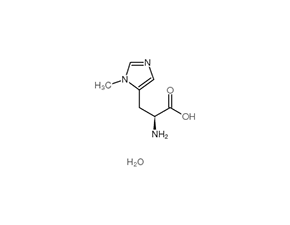
3-Methyl-L-histidine
CAS No. 368-16-1
3-Methyl-L-histidine( —— )
Catalog No. M21431 CAS No. 368-16-1
3-Methylhistidine belongs to the class of organic compounds known as histidine and derivatives. Histidine and derivatives are compounds containing cysteine or a derivative thereof resulting from reaction of cysteine at the amino group or the carboxy group or from the replacement of any hydrogen of glycine by a heteroatom.
Purity : >98% (HPLC)
 COA
Datasheet
HNMR
HPLC
MSDS
Handing Instructions
COA
Datasheet
HNMR
HPLC
MSDS
Handing Instructions
| Size | Price / USD | Stock | Quantity |
| 25MG | 35 | In Stock |


|
| 100MG | Get Quote | In Stock |
|
| 200MG | Get Quote | In Stock |
|
| 500MG | Get Quote | In Stock |
|
| 1G | Get Quote | In Stock |
|
Biological Information
-
Product Name3-Methyl-L-histidine
-
NoteResearch use only, not for human use.
-
Brief Description3-Methylhistidine belongs to the class of organic compounds known as histidine and derivatives. Histidine and derivatives are compounds containing cysteine or a derivative thereof resulting from reaction of cysteine at the amino group or the carboxy group or from the replacement of any hydrogen of glycine by a heteroatom.
-
Description3-Methylhistidine belongs to the class of organic compounds known as histidine and derivatives. Histidine and derivatives are compounds containing cysteine or a derivative thereof resulting from reaction of cysteine at the amino group or the carboxy group or from the replacement of any hydrogen of glycine by a heteroatom. It is also a biomarker for the consumption of soy products. 3-Methylhistidine is a very strong basic compound (based on its pKa). 3-Methylhistidine exists in all eukaryotes ranging from yeast to humans. In humans 3-methylhistidine is involved in methylhistidine metabolism. 3-Methylhistidine with regard to humans has been found to be associated with several diseases such as diabetes mellitus type 2 eosinophilic esophagitis and kidney disease; 3-methylhistidine has also been linked to the inborn metabolic disorder propionic acidemia. The measurement of 3-methylhistidine provides an index of the rate of muscle protein breakdown. 3-Methylhistidine is a product of peptide bond synthesis and methylation of actin and myosin. 3-Methylhistidine is a biomarker for meat consumption especially chicken.
-
In Vitro——
-
In Vivo——
-
Synonyms——
-
PathwayProteasome/Ubiquitin
-
TargetEndogenous Metabolite
-
RecptorHuman Endogenous Metabolite
-
Research AreaMetabolic Disease
-
IndicationIntestinal Diseases
Chemical Information
-
CAS Number368-16-1
-
Formula Weight169.18
-
Molecular FormulaC7H11N3O2
-
Purity>98% (HPLC)
-
SolubilityIn Vitro:?H2O : 100 mg/mL (591.09 mM)
-
SMILESCn1c(C[C@@H](C(O)=O)N)cnc1
-
Chemical Name——
Shipping & Storage Information
-
Storage(-20℃)
-
ShippingWith Ice Pack
-
Stability≥ 2 years
Reference
molnova catalog



related products
-
D-Glucose-13C6
D-Glucose-13C6 (Dextrose-13C6) is an isotopic marker of D-Glucose, which can be used as a metabolic tracer for the study of metabolism-related diseases and metabolic processes of some substances in the body.
-
D-Pipecolinic acid
D-Pipecolinic acid ((R)-Piperidine-2-carboxylic acid) is a normal human metabolite found in human biological fluids.
-
Oleoylethanolamide
Oleoylethanolamide is a high affinity endogenous agonist of PPAR-α.In vitro studies showed that OEA inhibited transforming growth factor β1-stimulated HSCs activation through suppressing Smad2/3 phosphorylation, α-SMA expression and myofibroblast transformation.
