


 Cart
Cart
 sales@molnova.com


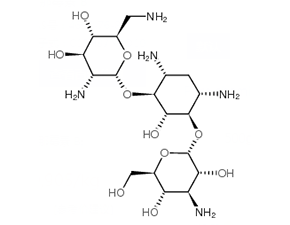
Bekanamycin
CAS No. 4696-76-8
Bekanamycin( Kanamycin B )
Catalog No. M21416 CAS No. 4696-76-8
Bekanamycin is an aminoglycoside antibiotic.
Purity : >98% (HPLC)
 COA
Datasheet
HNMR
HPLC
MSDS
Handing Instructions
COA
Datasheet
HNMR
HPLC
MSDS
Handing Instructions
| Size | Price / USD | Stock | Quantity |
| 25MG | 54 | In Stock |


|
| 50MG | 85 | In Stock |
|
| 100MG | 136 | In Stock |
|
| 200MG | Get Quote | In Stock |
|
| 500MG | 382 | In Stock |
|
| 1G | 615 | In Stock |
|
Biological Information
-
Product NameBekanamycin
-
NoteResearch use only, not for human use.
-
Brief DescriptionBekanamycin is an aminoglycoside antibiotic.
-
DescriptionBekanamycin is an aminoglycoside antibiotic.(In Vitro):Bekanamycin (Kanamycin B) is a precursor for semisynthetic antibiotics such as Arbekacin and Dibekacin and is generally extracted from the broth of S. kanamyceticus.Bekanamycin (Kanamycin B) in a concentration-dependent fashion reduces reversibly the quantal content of the end-plate potentials while it has no observable effect on the configuration of the extracellularly recorded presynaptic action potential. The reduction in evoked transmitter release produced by Bekanamycin could be antagonized either by increasing the external calcium concentration or by drugs like the aminopyridines which are to greatly enhance transmitter release from motor nerve terminals. Bekanamycin exerts potent inhibitory effects on transmitter release probably by interfering with the influx of calcium that occurs during depolarization of motor nerve terminals.
-
In VitroBekanamycin (Kanamycin B) is a precursor for semisynthetic antibiotics such as Arbekacin and Dibekacin and is generally extracted from the broth of S. kanamyceticus.Bekanamycin (Kanamycin B) in a concentration-dependent fashion reduces reversibly the quantal content of the end-plate potentials while it has no observable effect on the configuration of the extracellularly recorded presynaptic action potential. The reduction in evoked transmitter release produced by Bekanamycin could be antagonized either by increasing the external calcium concentration or by drugs like the aminopyridines which are to greatly enhance transmitter release from motor nerve terminals. Bekanamycin exerts potent inhibitory effects on transmitter release probably by interfering with the influx of calcium that occurs during depolarization of motor nerve terminals.
-
In Vivo——
-
SynonymsKanamycin B
-
PathwayMicrobiology/Virology
-
TargetAntibiotic
-
RecptorAntibiotic
-
Research Area——
-
Indication——
Chemical Information
-
CAS Number4696-76-8
-
Formula Weight483.51
-
Molecular FormulaC18H37N5O10
-
Purity>98% (HPLC)
-
SolubilityH2O:100 mg/mL (206.82 mM);DMSO:1 mg/mL (2.07 mM; ultrasonic and warming and heat to 80°C)
-
SMILESC1[C@@H]([C@H]([C@@H]([C@H]([C@@H]1N)O[C@@H]2[C@@H]([C@H]([C@@H]([C@H](O2)CO)O)N)O)O)O[C@@H]3[C@@H]([C@H]([C@@H]([C@H](O3)CN)O)O)N)N
-
Chemical Name(2R3S4R5R6R)-5-amino-2-(aminomethyl)-6-(((1R2S3S4R6S)-46-diamino-3-(((2S3R4S5S6R)-4-amino-35-dihydroxy-6-(hydroxymethyl)tetrahydro-2H-pyran-2-yl)oxy)-2-hydroxycyclohexyl)oxy)tetrahydro-2H-pyran-34-diol
Shipping & Storage Information
-
Storage(-20℃)
-
ShippingWith Ice Pack
-
Stability≥ 2 years
Reference
1.Morales MA et al. Effects of bekanamycin and dibekacin on the electrical activity of cardiac pacemaker cells. Arch Med Res. 1993 Winter;24(4):339-45.
molnova catalog



related products
-
N6-Bz-5-O-DMTr-3-deo...
N6-Bz-5'-O-DMTr-3'-deoxyadenosine-2'-O-CED-phosphoramidite, an adenine nucleoside analog, has potential vasodilator and anticancer activities relevant to cancer research.
-
Tebipenem
Tebipenem is an orally available carbapenem antibiotic. It displays broad-spectrum activity against Gram-positive and -negative bacteria.
-
Puromycin
Puromycin is an antibiotic protein synthesis inhibitor. It inhibits protein synthesis by binding to RNA. It also serves as an anticancer drug by suppressing the growth and metastasis in esophagus cancer cells by Akt phosphorylation. It is an antineoplastic and antitrypanosomal agent and is used in research as an inhibitor of protein synthesis.
