


 Cart
Cart
 sales@molnova.com


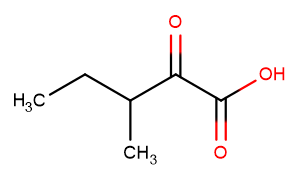
3-Methyl-2-oxovaleric acid
CAS No. 1460-34-0
3-Methyl-2-oxovaleric acid( —— )
Catalog No. M21412 CAS No. 1460-34-0
3-Methyl-2-oxovaleric acid is an abnormal metabolite that arises from the incomplete breakdown of branched-chain amino acids. 3-Methyl-2-oxovaleric acid is a neurotoxin an acidogen and a metabotoxin. A neurotoxin causes damage to nerve cells and nerve tissues.
Purity : >98% (HPLC)
 COA
Datasheet
HNMR
HPLC
MSDS
Handing Instructions
COA
Datasheet
HNMR
HPLC
MSDS
Handing Instructions
| Size | Price / USD | Stock | Quantity |
| 50MG | 28 | In Stock |


|
| 100MG | 37 | In Stock |
|
| 200MG | 52 | In Stock |
|
| 500MG | Get Quote | In Stock |
|
| 1G | Get Quote | In Stock |
|
Biological Information
-
Product Name3-Methyl-2-oxovaleric acid
-
NoteResearch use only, not for human use.
-
Brief Description3-Methyl-2-oxovaleric acid is an abnormal metabolite that arises from the incomplete breakdown of branched-chain amino acids. 3-Methyl-2-oxovaleric acid is a neurotoxin an acidogen and a metabotoxin. A neurotoxin causes damage to nerve cells and nerve tissues.
-
Description3-Methyl-2-oxovaleric acid is an abnormal metabolite that arises from the incomplete breakdown of branched-chain amino acids. 3-Methyl-2-oxovaleric acid is a neurotoxin an acidogen and a metabotoxin. A neurotoxin causes damage to nerve cells and nerve tissues.
-
In Vitro——
-
In Vivo——
-
Synonyms——
-
PathwayProteasome/Ubiquitin
-
TargetEndogenous Metabolite
-
RecptorHuman Endogenous Metabolite
-
Research Area——
-
Indication——
Chemical Information
-
CAS Number1460-34-0
-
Formula Weight130.14
-
Molecular FormulaC6H10O3
-
Purity>98% (HPLC)
-
SolubilityDMSO:13 mg/mL (998.92 mM)
-
SMILESCCC(C)C(C(O)=O)=O
-
Chemical Name——
Shipping & Storage Information
-
Storage(-20℃)
-
ShippingWith Ice Pack
-
Stability≥ 2 years
Reference
molnova catalog



related products
-
Aniline
Aniline has been reported to be toxic to the spleen via iron overload and induction of oxidative stress via Heme Oxygenase 1 up-regulation.
-
(S)-3-Hydroxybutanoi...
(S)-3-Hydroxybutyric acid is a normal human metabolite that has been found elevated in geriatric patients remitting from depression.
-
L-Homocystine
Homocystine is the double-bonded form of homocysteine but it occurs only transiently before being converted to the harmless cystathionine via a vitamin B6-dependent enzyme. Increasing evidence supports a role for an elevation of homocysteine in schizophrenia.
