


 Cart
Cart
 sales@molnova.com


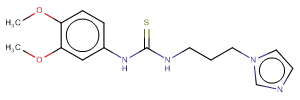
PBD-150
CAS No. 790663-33-1
PBD-150( —— )
Catalog No. M21163 CAS No. 790663-33-1
PBD-150 is an inhibitor of human glutaminyl cyclase (hQC) Y115E-Y117E variant( ki : 490 nM).
Purity : >98% (HPLC)
 COA
Datasheet
HNMR
HPLC
MSDS
Handing Instructions
COA
Datasheet
HNMR
HPLC
MSDS
Handing Instructions
| Size | Price / USD | Stock | Quantity |
| 1 mL x 10 mM in DMSO | 62 | In Stock |


|
| 2MG | 33 | In Stock |
|
| 5MG | 53 | In Stock |
|
| 10MG | 86 | In Stock |
|
| 25MG | 174 | In Stock |
|
| 50MG | 253 | In Stock |
|
| 100MG | 377 | In Stock |
|
| 200MG | Get Quote | In Stock |
|
| 500MG | Get Quote | In Stock |
|
| 1G | Get Quote | In Stock |
|
Biological Information
-
Product NamePBD-150
-
NoteResearch use only, not for human use.
-
Brief DescriptionPBD-150 is an inhibitor of human glutaminyl cyclase (hQC) Y115E-Y117E variant( ki : 490 nM).
-
DescriptionPBD-150 is an inhibitor of human glutaminyl cyclase (hQC) Y115E-Y117E variant( ki : 490 nM).
-
In Vitro——
-
In VivoPBD-150 is able to reduce the deposition of pyroglutamate-modified amyloid-β peptides in brain of transgenic mouse models of Alzheimer disease, leading to a significant improvement of learning and memory in those transgenic animals.
-
Synonyms——
-
PathwayMembrane Transporter/Ion Channel
-
TargetBeta Amyloid
-
Recptorglutaminyl cyclase (hQC) Y115E-Y117E
-
Research Area——
-
Indication——
Chemical Information
-
CAS Number790663-33-1
-
Formula Weight320.4
-
Molecular FormulaC15H20N4O2S
-
Purity>98% (HPLC)
-
SolubilityDMSO:125 mg/mL (390.13 mM; Need ultrasonic)
-
SMILESCOc1ccc(NC(=S)NCCCn2ccnc2)cc1OC
-
Chemical Name——
Shipping & Storage Information
-
Storage(-20℃)
-
ShippingWith Ice Pack
-
Stability≥ 2 years
Reference
1.Huang K.-F Liaw S.-S Huang W.-Let al. Structures of Human Golgi-resident Glutaminyl Cyclase and Its Complexes with Inhibitors Reveal a Large Loop Movement upon Inhibitor Binding[J]. Journal of Biological Chemistry 286(14):12439-12449.
molnova catalog



related products
-
Scyllo-Inositol
Scyllo-Inositol is one of the inositol stereoisomers rare in the nature and expected as a promising disease-modifying therapeutic agent for Alzheimer's disease.
-
β-Amyloid 22-35
β-Amyloid (22-35) is a 14-aa peptide, shows aggregates and induces neurotoxicity in the hippocampal cells. Beta amyloid (22-35) is a synthetic truncated fragment of beta-amyloid peptide.
-
Astrophloxine
Astrophloxine is a fluorescent imaging probe that targets antiparallel dimers and can be used to detect aggregated Aβ in brain tissue and cerebrospinal fluid samples from Alzheimer's disease (AD) mice.
