


 Cart
Cart
 sales@molnova.com


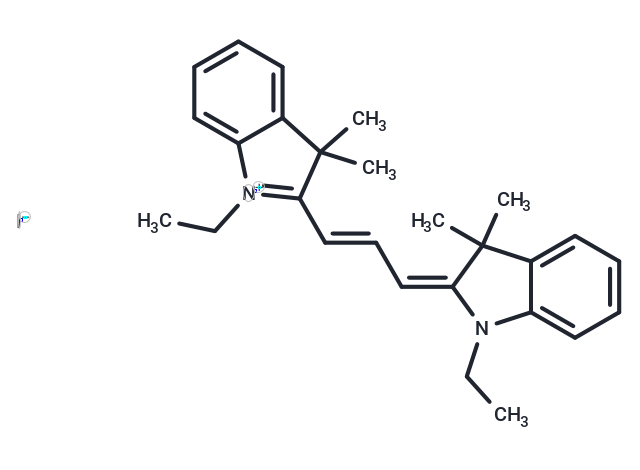
Astrophloxine
CAS No. 14696-39-0
Astrophloxine( —— )
Catalog No. M35727 CAS No. 14696-39-0
Astrophloxine is a fluorescent imaging probe that targets antiparallel dimers and can be used to detect aggregated Aβ in brain tissue and cerebrospinal fluid samples from Alzheimer's disease (AD) mice.
Purity : >98% (HPLC)
 COA
Datasheet
HNMR
HPLC
MSDS
Handing Instructions
COA
Datasheet
HNMR
HPLC
MSDS
Handing Instructions
| Size | Price / USD | Stock | Quantity |
| 1 mL x 10 mM in DMSO | 28 | In Stock |


|
| 100MG | 35 | In Stock |
|
| 200MG | Get Quote | In Stock |
|
| 500MG | 83 | In Stock |
|
| 1G | Get Quote | In Stock |
|
Biological Information
-
Product NameAstrophloxine
-
NoteResearch use only, not for human use.
-
Brief DescriptionAstrophloxine is a fluorescent imaging probe that targets antiparallel dimers and can be used to detect aggregated Aβ in brain tissue and cerebrospinal fluid samples from Alzheimer's disease (AD) mice.
-
DescriptionAstrophloxine is a fluorescent imaging probe capable of targeting antiparallel dimers. Astrophloxine can be used to detect aggregated Aβ in brain tissue and cerebrospinal fluid samples of Alzheimer's disease (AD) mice.
-
In VitroAstrophloxine binds Aβ dimers with stronger fluorescence intensity (A.U.) than binding Aβ monomers.Protocol for CSF analyses:1.Prepare 1 μL of CSF samples with 1 μL of 10X protease inhibitors and diluted the mixture with 8 μL of binding buffer. Binding buffer (0.1 M sodium phosphate, 0.15 M sodium chloride, 10 mM EDTA; pH 7.2).2.Dilute Astrophloxine to 0.5 μM with binding buffer.3.Add individual samples and dye to the wells of a 96-well half-area black microplate with a sample to dye ratio of 1:3.
-
In VivoAstrophloxine shows more fluorescence (A.U.) in APP/PS1 mice CSF rather in WT mice, and is able to indicate soluble Aβ oligomers in CSF and insoluble plaques in brain tissue.
-
Synonyms——
-
PathwayMembrane Transporter/Ion Channel
-
TargetBeta Amyloid
-
RecptorBeta Amyloid
-
Research Area——
-
Indication——
Chemical Information
-
CAS Number14696-39-0
-
Formula Weight512.47
-
Molecular FormulaC27H33IN2
-
Purity>98% (HPLC)
-
Solubility——
-
SMILES[I-].CCN1\C(=C\C=C\C2=[N+](CC)c3ccccc3C2(C)C)C(C)(C)c2ccccc12
-
Chemical Name——
Shipping & Storage Information
-
Storage(-20℃)
-
ShippingWith Ice Pack
-
Stability≥ 2 years
Reference
1. Lee JC, et al. Discovery of Chemicals to Either Clear or Indicate Amyloid Aggregates by Targeting Memory-Impairing Anti-Parallel Aβ Dimers. Angew Chem Int Ed Engl. 2020 Jul 6;59(28):11491-11500.? ?
molnova catalog



related products
-
TABERSONINE HYDROCHL...
TABERSONINE HYDROCHLORIDE is a natural product extracted from the bean of Voacanga africana is a potent inhibitor against Aβ(1?42) aggregation and toxicity.
-
β-Amyloid Protein Pr...
Beta-Amyloid Protein Precursor 770 (135-155)Aβ Protein Precursor 770 (135-155)
-
β-Amyloid 18-28
Intracerebroventricular administration of synthetic peptides Beta-amyloid (12-20), (12-28), and (18-28) causes amnesia in mice. These peptides have only amino acid residues VFF at position 18 to 20 in common, suggesting the amnestic effect of the triad.
