


 Cart
 sales@molnova.com


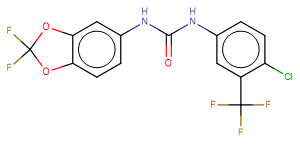
PK150
CAS No. 2165324-62-7
PK150( —— )
Catalog No. M21144 CAS No. 2165324-62-7
PK150 shows oral bioavailability and antibacterial activity against several pathogenic strains at submicromolar concentrations.
Purity : >98% (HPLC)
 COA
Datasheet
HNMR
HPLC
MSDS
Handing Instructions
| Size | Price / USD | Stock | Quantity |
| 1 mL x 10 mM in DMSO | 50 | In Stock |


|
| 2MG | 29 | In Stock |
|
| 5MG | 46 | In Stock |
|
| 10MG | 69 | In Stock |
|
| 25MG | 139 | In Stock |
|
| 50MG | 217 | In Stock |
|
| 100MG | 349 | In Stock |
|
| 200MG | 513 | In Stock |
|
| 500MG | Get Quote | In Stock |
|
| 1G | Get Quote | In Stock |
|
Biological Information
-
Product NamePK150
-
NoteResearch use only, not for human use.
-
Brief DescriptionPK150 shows oral bioavailability and antibacterial activity against several pathogenic strains at submicromolar concentrations.
-
DescriptionPK150 shows oral bioavailability and antibacterial activity against several pathogenic strains at submicromolar concentrations.
-
In Vitro——
-
In VivoThe in vivo efficacy of PK150 against methicillin-sensitive S. aureus (MSSA) (strain SH1000) is demonstrated in a murine bloodstream infection model. PK150 (20?mg/kg; p.o.) significantly reduces bacterial loads in the liver and heart.PK150 (10 and 20mg/kg orally; or 10mg/kg intravenously) shows no obvious signs of toxicity in mice. Higher i.v. dosing of 20mg/kg results in severe toxic effects and is thus avoided for subsequent therapeutic models. Animal Model:Pathogen-free 9-week old female C57BL/6J miceDosage:20?mg/kg Administration:Administered p.o.Result:Bacterial loads in the liver and heart were both significantly reduced by approximately 100-fold.Animal Model:Outbred male CD-1 mice, 4 weeks oldDosage:10 and 20 mg/kg (Pharmacokinetic Analysis) Administration:Administered by intragastric gavage at 10 and 20 mg/kg or intravenously at 10 mg/kg Result:Oral bioavailability was approximately 63% and the mean residence time was slightly enhanced via this administration route.T1/2=11.69±1.5, 9.67±0.2, and 9.37±0.5 hours for 10 mg/kg i.v., 10 mg/kg p.o., and 20 mg/kg p.o., respectively.
-
Synonyms——
-
PathwayOthers
-
TargetOther Targets
-
Recptorothers
-
Research Area——
-
Indication——
Chemical Information
-
CAS Number2165324-62-7
-
Formula Weight394.68
-
Molecular FormulaC15H3ClF5N2O3
-
Purity>98% (HPLC)
-
SolubilityDMSO:250 mg/mL (633.42 mM; Need ultrasonic)
-
SMILESO=C(Nc1ccc2c(c1)OC(F)(F)O2)Nc1ccc(Cl)c(C(F)(F)F)c1
-
Chemical Name——
Shipping & Storage Information
-
Storage(-20℃)
-
ShippingWith Ice Pack
-
Stability≥ 2 years
Reference
1.Le P et al. Repurposing human kinase inhibitors to create an antibiotic active against drug-resistant Staphylococcus aureus persisters and biofilms. Nat Chem. 2019 Dec 16.
molnova catalog



related products
-
BAY 2402234
BAY 2402234 (BAY2402234) is a novel potent, selective, orally bioavailable DHODH inhibitor with IC50 of 1.2 nM.
-
D-Glucose 6-phosphat...
In cells D-glucose 6-phosphate (G6P) is generated when glucose is phosphorylated by hexokinase or glucokinase or by the conversion of glucose-1-phosphate by phosphoglucomutase during glycogenolysis. G6P lies at the beginning of both glycolysis and the pentose phosphate pathways. It also can be stored as glycogen when blood glucose levels are high.
-
Coumaperine
Coumaperine, a product found in white pepper, is also a 5-LOX inhibitor with potential anti-inflammatory and anti-cancer activity and can be used to study inflammatory diseases caused by bacterial infections.
