


 Cart
Cart
 sales@molnova.com


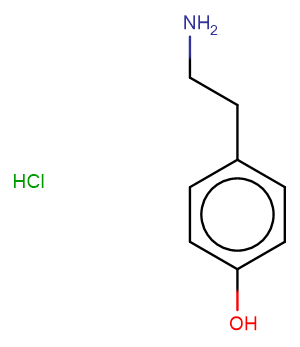
Tyramine hydrochloride
CAS No. 60-19-5
Tyramine hydrochloride( —— )
Catalog No. M21102 CAS No. 60-19-5
Tyramine hydrochloride is a biogenic trace amine that is generated via the decarboxylation of the amino acid tyrosine exhibiting neuromodulatory properties as well as cardiovascular and immunological effects.
Purity : >98% (HPLC)
 COA
Datasheet
HNMR
HPLC
MSDS
Handing Instructions
COA
Datasheet
HNMR
HPLC
MSDS
Handing Instructions
| Size | Price / USD | Stock | Quantity |
| 1 mL x 10 mM in DMSO | 28 | In Stock |


|
| 100MG | Get Quote | In Stock |
|
| 200MG | Get Quote | In Stock |
|
| 500MG | 37 | In Stock |
|
| 1G | 45 | In Stock |
|
Biological Information
-
Product NameTyramine hydrochloride
-
NoteResearch use only, not for human use.
-
Brief DescriptionTyramine hydrochloride is a biogenic trace amine that is generated via the decarboxylation of the amino acid tyrosine exhibiting neuromodulatory properties as well as cardiovascular and immunological effects.
-
DescriptionTyramine hydrochloride is a biogenic trace amine that is generated via the decarboxylation of the amino acid tyrosine exhibiting neuromodulatory properties as well as cardiovascular and immunological effects.
-
In VitroTyramine is normally broken down in your body by an enzyme called MAO (monoamine oxidase).
-
In Vivo——
-
Synonyms——
-
PathwayOthers
-
TargetOther Targets
-
RecptorOthers
-
Research Area——
-
Indication——
Chemical Information
-
CAS Number60-19-5
-
Formula Weight173.64
-
Molecular FormulaC8H12ClNO
-
Purity>98% (HPLC)
-
SolubilityIn Vitro:?DMSO : 100 mg/mL (575.90 mM)
-
SMILESCl.NCCc1ccc(O)cc1
-
Chemical Name4-Hydroxyphenethylammonium chloride
Shipping & Storage Information
-
Storage(-20℃)
-
ShippingWith Ice Pack
-
Stability≥ 2 years
Reference
1.Gaby Andersen Patrick et al. Food sources and biomolecular targets of tyramine.[J]. Nutrition Reviews 2018.
molnova catalog



related products
-
broparestrol
broparestrol is a useful organic compound for research related to life sciences. The catalog number is T9801 and the CAS number is 479-68-5.
-
Malvidin-3-O-galacto...
Malvidin-3-O-galactoside chloride has antioxidant activity.
-
Flibanserin
Flibanserin is a serotonergic antidepressant used to treat hypoactive sexual desire disorder.
