


 Cart
Cart
 sales@molnova.com


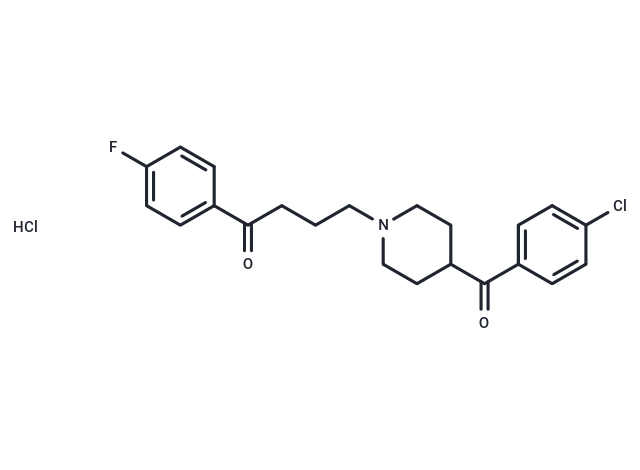
Cloroperone hydrochloride
CAS No. 55695-56-2
Cloroperone hydrochloride( —— )
Catalog No. M34551 CAS No. 55695-56-2
Cloroperone hydrochloride (AHR-6134) has anxiolytic activity and may be used in the study of neurologic disorders.
Purity : >98% (HPLC)
 COA
Datasheet
HNMR
HPLC
MSDS
Handing Instructions
COA
Datasheet
HNMR
HPLC
MSDS
Handing Instructions
| Size | Price / USD | Stock | Quantity |
| 5MG | 686 | In Stock |


|
| 10MG | 938 | In Stock |
|
| 25MG | 1444 | In Stock |
|
| 50MG | 1841 | In Stock |
|
| 100MG | Get Quote | In Stock |
|
| 200MG | Get Quote | In Stock |
|
| 500MG | Get Quote | In Stock |
|
| 1G | Get Quote | In Stock |
|
Biological Information
-
Product NameCloroperone hydrochloride
-
NoteResearch use only, not for human use.
-
Brief DescriptionCloroperone hydrochloride (AHR-6134) has anxiolytic activity and may be used in the study of neurologic disorders.
-
DescriptionCloroperone hydrochloride (AHR-6134) has anxiolytic activity and may be used in the study of neurologic disorders.
-
In Vitro——
-
In Vivo——
-
Synonyms——
-
PathwayOthers
-
TargetOther Targets
-
RecptorOthers
-
Research Area——
-
Indication——
Chemical Information
-
CAS Number55695-56-2
-
Formula Weight424.34
-
Molecular FormulaC22H24Cl2FNO2
-
Purity>98% (HPLC)
-
Solubility——
-
SMILESCl.O=C(C1=CC=C(F)C=C1)CCCN2CCC(C(=O)C3=CC=C(Cl)C=C3)CC2
-
Chemical Name——
Shipping & Storage Information
-
Storage(-20℃)
-
ShippingWith Ice Pack
-
Stability≥ 2 years
Reference
molnova catalog



related products
-
Methyl (E)-sinapate
Methyl (E)-sinapate is isolated from the Polygala sibirica L.var. megalopha Fr.
-
Methyl Icosanoate
Methyl Icosanoate is an esterified form of arachidic acid.
-
Monotropein
Monotropein has anti-inflammatory action by inhibition of the expressions of inflammatory mediators via NF-κB inactivation, and support its possible therapeutic role in colitis.
