


 Cart
Cart
 sales@molnova.com


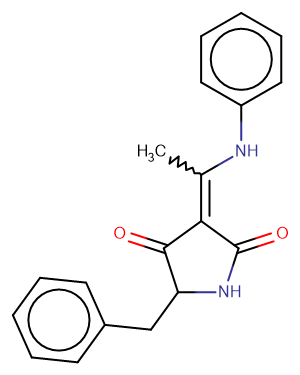
TN-16
CAS No. 33016-12-5
TN-16( —— )
Catalog No. M21073 CAS No. 33016-12-5
TN-16 is a microtubule polymerization inhibitor (IC50 :0.4-1.7 μM).
Purity : >98% (HPLC)
 COA
Datasheet
HNMR
HPLC
MSDS
Handing Instructions
COA
Datasheet
HNMR
HPLC
MSDS
Handing Instructions
| Size | Price / USD | Stock | Quantity |
| 1 mL x 10 mM in DMSO | 38 | In Stock |


|
| 5MG | 29 | In Stock |
|
| 10MG | 48 | In Stock |
|
| 25MG | 79 | In Stock |
|
| 50MG | 111 | In Stock |
|
| 100MG | Get Quote | In Stock |
|
| 200MG | Get Quote | In Stock |
|
| 500MG | Get Quote | In Stock |
|
| 1G | Get Quote | In Stock |
|
Biological Information
-
Product NameTN-16
-
NoteResearch use only, not for human use.
-
Brief DescriptionTN-16 is a microtubule polymerization inhibitor (IC50 :0.4-1.7 μM).
-
DescriptionTN-16 is a microtubule polymerization inhibitor (IC50 :0.4-1.7 μM).
-
In Vitro——
-
In Vivo——
-
Synonyms——
-
PathwayOthers
-
TargetOther Targets
-
Recptormicrotubule polymerization
-
Research Area——
-
Indication——
Chemical Information
-
CAS Number33016-12-5
-
Formula Weight306.36
-
Molecular FormulaC19H18N2O2
-
Purity>98% (HPLC)
-
Solubility——
-
SMILESCC(Nc1ccccc1)=C1C(=O)NC(Cc2ccccc2)C1=O
-
Chemical Name3-[1-(Phenylamino)ethylidene]-5-(phenylmethyl)-24-pyrrolidinedione
Shipping & Storage Information
-
Storage(-20℃)
-
ShippingWith Ice Pack
-
Stability≥ 2 years
Reference
1.Nakamura M Kanda S Kawamura M et al. Effects of low concentration of vinblastine on the anchorage-independent growth and in vitro invasion of human renal carcinoma cell lines[J]. Cancer letters 1993 69(2):85-91.
molnova catalog



related products
-
Robenidine hydrochlo...
Robenidine hydrochloride is an anticoccidial agent mainly for poultry.
-
Quetmolimab
Quetmolimab is a humanized monoclonal antibody targeting chemokine ligand 1 (CX3CL1) that can be used to study rheumatoid arthritis.
-
Foropafant
Foropafant is a highly potent and selective platelet-activating factor (PAF) receptor antagonist (Ki: 57 pM).
