


 Cart
Cart
 sales@molnova.com


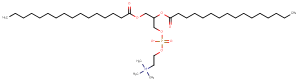
DPPC
CAS No. 63-89-8
DPPC( 129Y83 | 12-DIPALMITOYL-SN-GLYCERO-3-PHOSPHOCHOL )
Catalog No. M20978 CAS No. 63-89-8
DPPC is a zwitterionic glycerophospholipid commonly used in the formation of lipid monolayers bilayers and liposomes.
Purity : >98% (HPLC)
 COA
Datasheet
HNMR
HPLC
MSDS
Handing Instructions
COA
Datasheet
HNMR
HPLC
MSDS
Handing Instructions
| Size | Price / USD | Stock | Quantity |
| 50MG | 37 | In Stock |


|
| 100MG | 55 | In Stock |
|
| 200MG | Get Quote | In Stock |
|
| 500MG | Get Quote | In Stock |
|
| 1G | Get Quote | In Stock |
|
Biological Information
-
Product NameDPPC
-
NoteResearch use only, not for human use.
-
Brief DescriptionDPPC is a zwitterionic glycerophospholipid commonly used in the formation of lipid monolayers bilayers and liposomes.
-
DescriptionDPPC is a zwitterionic glycerophospholipid commonly used in the formation of lipid monolayers bilayers and liposomes.
-
In Vitro——
-
In Vivo——
-
Synonyms129Y83 | 12-DIPALMITOYL-SN-GLYCERO-3-PHOSPHOCHOL
-
PathwayProteasome/Ubiquitin
-
TargetEndogenous Metabolite
-
RecptorHuman Endogenous Metabolite
-
Research Area——
-
Indication——
Chemical Information
-
CAS Number63-89-8
-
Formula Weight734.04
-
Molecular FormulaC40H80NO8P
-
Purity>98% (HPLC)
-
SolubilityIn Vitro:?Ethanol : 25 mg/mL (34.06 mM)
-
SMILESCCCCCCCCCCCCCCCC(=O)OCC(COP(=O)([O-])OCC[N+](C)(C)C)OC(=O)CCCCCCCCCCCCCCC
-
Chemical Name12-dihexadecanoyl-sn-glycero-3-phosphorylcholine
Shipping & Storage Information
-
Storage(-20℃)
-
ShippingWith Ice Pack
-
Stability≥ 2 years
Reference
1.Uemura A Watarai S Iwasaki T et al. Induction of Immune Responses against Glycosphingolipid Antigens: Comparison of Antibody Responses in Mice Immunized with Antigen Associated with Liposomes Prepared from Various Phospholipids[J]. Journal of Veterinary Medical Science 2005 67(12):1197-1201.
molnova catalog



related products
-
4-Hydroxyphenylpyruv...
4-Hydroxyphenylpyruvic acid is an enzyme inhibitor.4-Hydroxyphenylpyruvic acid (4-HPPA) is a keto acid that is involved in the tyrosine catabolism pathway.
-
Eicosadienoic acid
Eicosadienoic acid is a rare naturally occurring n-6 polyunsaturated fatty acid found mainly in animal tissues.
-
MDCG sodium
MDCG sodium (N-methyl-N-dithiocarboxyglucamine sodium) is a metal chelator that promotes biliary excretion of Cd.
