


 Cart
Cart
 sales@molnova.com


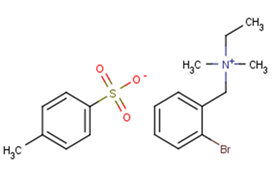
Bretylium tosylate
CAS No. 61-75-6
Bretylium tosylate( —— )
Catalog No. M20751 CAS No. 61-75-6
Bretylium tosylate is an inhibitor of the presynaptic release of vasoconstrictor neurotransmitters a available antiarrhythmic drug for ventricular arrhythmias.
Purity : >98% (HPLC)
 COA
Datasheet
HNMR
HPLC
MSDS
Handing Instructions
COA
Datasheet
HNMR
HPLC
MSDS
Handing Instructions
| Size | Price / USD | Stock | Quantity |
| 1 mL x 10 mM in DMSO | 62 | In Stock |


|
| 2MG | 35 | In Stock |
|
| 5MG | 56 | In Stock |
|
| 10MG | 86 | In Stock |
|
| 25MG | 113 | In Stock |
|
| 50MG | 140 | In Stock |
|
| 100MG | 166 | In Stock |
|
| 200MG | 257 | In Stock |
|
| 500MG | Get Quote | In Stock |
|
| 1G | Get Quote | In Stock |
|
Biological Information
-
Product NameBretylium tosylate
-
NoteResearch use only, not for human use.
-
Brief DescriptionBretylium tosylate is an inhibitor of the presynaptic release of vasoconstrictor neurotransmitters a available antiarrhythmic drug for ventricular arrhythmias.
-
DescriptionBretylium tosylate is an inhibitor of the presynaptic release of vasoconstrictor neurotransmitters a available antiarrhythmic drug for ventricular arrhythmias.
-
In Vitro——
-
In Vivo——
-
Synonyms——
-
PathwayOthers
-
TargetOther Targets
-
RecptorOthers
-
Research AreaOthers
-
Indicationxerophthalmia
Chemical Information
-
CAS Number61-75-6
-
Formula Weight414.36
-
Molecular FormulaC18H24BrNO3S
-
Purity>98% (HPLC)
-
SolubilityDMSO:30 mg/mL (72.40 mM)
-
SMILESCC1=CC=C(C=C1)S([O-])(=O)=O.CC[N+](C)(C)CC1=CC=CC=C1Br
-
Chemical Name——
Shipping & Storage Information
-
Storage(-20℃)
-
ShippingWith Ice Pack
-
Stability≥ 2 years
Reference
1.Dhurandhar R W Teasdale S J Mahon W A . Bretylium Tosylate in the Management of Refractory Ventricular Fibrillation[J]. Canadian Medical Association journal 1971 105(2):161-5 passim.
molnova catalog



related products
-
AK-778-XXMU
AK-778-XXMU is an ID2 antagonist with a KD value of 129 nM.AK-778-XXMU has potential antitumor and anticancer activity and can be used for the study of gliomas.
-
TriacetonaMine
Triacetonamine protects the activitis of superoxide dismutase(SOD) and creatine phos-phate kinase (CPK); it also inhibits CaCl2 induced agglomeration of thromocyte. Triacetonamine can improve the constructile function of heart mus-cles of acute anemia and decrease the content of malodialdehyde (MDA) in the heart muscles.
-
COH34 analog 1
COH34 analog 1 is a COH34 oxidation analogue that can be used to synthesize active compounds.
