


 Cart
Cart
 sales@molnova.com


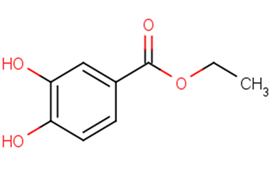
Ethyl 34-dihydroxybenzoate
CAS No. 3943-89-3
Ethyl 34-dihydroxybenzoate( —— )
Catalog No. M20341 CAS No. 3943-89-3
Ethyl 34-dihydroxybenzoate (EDHB): a prolyl hydroxylase inhibitor attenuates acute hypobaric hypoxia mediated vascular leakage in brain.
Purity : >98% (HPLC)
 COA
Datasheet
HNMR
HPLC
MSDS
Handing Instructions
COA
Datasheet
HNMR
HPLC
MSDS
Handing Instructions
| Size | Price / USD | Stock | Quantity |
| 1 mL x 10 mM in DMSO | 43 | In Stock |


|
| 100MG | Get Quote | In Stock |
|
| 200MG | 28 | In Stock |
|
| 500MG | 38 | In Stock |
|
| 1G | 52 | In Stock |
|
Biological Information
-
Product NameEthyl 34-dihydroxybenzoate
-
NoteResearch use only, not for human use.
-
Brief DescriptionEthyl 34-dihydroxybenzoate (EDHB): a prolyl hydroxylase inhibitor attenuates acute hypobaric hypoxia mediated vascular leakage in brain.
-
DescriptionEthyl 34-dihydroxybenzoate (EDHB): a prolyl hydroxylase inhibitor attenuates acute hypobaric hypoxia mediated vascular leakage in brain.
-
In Vitro——
-
In Vivo——
-
Synonyms——
-
PathwayOthers
-
TargetOther Targets
-
Recptorprolyl hydroxylas
-
Research Area——
-
Indication——
Chemical Information
-
CAS Number3943-89-3
-
Formula Weight182.17
-
Molecular FormulaC9H10O4
-
Purity>98% (HPLC)
-
SolubilityIn Vitro:?DMSO : 100 mg/mL (548.91 mM)
-
SMILESCCOC(=O)c1ccc(O)c(O)c1
-
Chemical NameEthyl-34-dihydroxybenzoate; Ethyl protocatechuate
Shipping & Storage Information
-
Storage(-20℃)
-
ShippingWith Ice Pack
-
Stability≥ 2 years
Reference
1.Nandan D Clarke E P Ball E H et al. Ethyl-34-dihydroxybenzoate inhibits myoblast differentiation: Evidence for an essential role of collagen[J]. The Journal of Cell Biology 1990 110(5):1673-1679.
molnova catalog



related products
-
Cyanidin-3-O-sambubi...
Cyanidin-3-O-sambubioside-5-O-glucoside chloride is a natural product for research related to life sciences.
-
Copper histidine
Copper histidine inhibited Ctr1-mediated cellular uptake of oxaliplatin in vitro without altering oxaliplatin accumulation of platinum or neurotoxicity in DRG tissues in vivo.
-
IRBP(668-687) (TFA)
Interphotoreceptor retinoid-binding protein(668-687) TFA is the 668-687 amino acid residue of human Interphotoreceptor retinoid binding protein(IRBP), which can induce uveitis.
