


 Cart
Cart
 sales@molnova.com


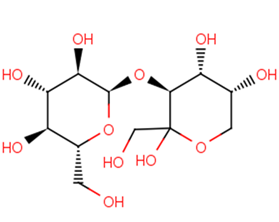
D-(+)-Turanose
CAS No. 547-25-1
D-(+)-Turanose( —— )
Catalog No. M20273 CAS No. 547-25-1
D(+)-Turanose is a naturally occuring compound. It is a reducing disaccharide.
Purity : >98% (HPLC)
 COA
Datasheet
HNMR
HPLC
MSDS
Handing Instructions
COA
Datasheet
HNMR
HPLC
MSDS
Handing Instructions
| Size | Price / USD | Stock | Quantity |
| 100MG | Get Quote | In Stock |


|
| 200MG | 33 | In Stock |
|
| 500MG | Get Quote | In Stock |
|
| 1G | Get Quote | In Stock |
|
Biological Information
-
Product NameD-(+)-Turanose
-
NoteResearch use only, not for human use.
-
Brief DescriptionD(+)-Turanose is a naturally occuring compound. It is a reducing disaccharide.
-
DescriptionD(+)-Turanose is a naturally occuring compound. It is a reducing disaccharide.
-
In Vitro——
-
In Vivo——
-
Synonyms——
-
PathwayProteasome/Ubiquitin
-
TargetEndogenous Metabolite
-
RecptorHuman Endogenous Metabolite
-
Research Area——
-
Indication——
Chemical Information
-
CAS Number547-25-1
-
Formula Weight342.3
-
Molecular FormulaC12H22O11
-
Purity>98% (HPLC)
-
SolubilityH2O:130 mg/mL (379.78 mM)
-
SMILESOC[C@H]1O[C@H](O[C@H]2[C@H](O)[C@H](O)COC2(O)CO)[C@H](O)[C@@H](O)[C@@H]1O
-
Chemical Name——
Shipping & Storage Information
-
Storage(-20℃)
-
ShippingWith Ice Pack
-
Stability≥ 2 years
Reference
1.Joo-Yeon C Jihye L Daeyeon L et al. Acute and 13-week subchronic toxicological evaluations of turanose in mice[J]. Nutrition Research and Practice 2017 11(6):452-.
molnova catalog



related products
-
L-Homocystine
Homocystine is the double-bonded form of homocysteine but it occurs only transiently before being converted to the harmless cystathionine via a vitamin B6-dependent enzyme. Increasing evidence supports a role for an elevation of homocysteine in schizophrenia.
-
Creatine D3 hydrate
Creatine D3 hydrate is a deuterium labeled Creatine hydrate. Creatine hydrate is pivotal in energy metabolism of muscle and brain cells, both in physiological and in pathological conditions.
-
Ovalbumins
Ovalbumins is the main protein found in egg whites. Ovalbumins have various biological activities such as antibacterial, anticancer, antihypertensive, antioxidant and immunomodulatory activities.
