


 Cart
Cart
 sales@molnova.com


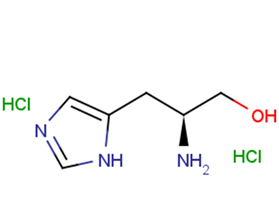
L-Histidinol dihydrochloride
CAS No. 1596-64-1
L-Histidinol dihydrochloride( —— )
Catalog No. M19736 CAS No. 1596-64-1
L-Histidinol dihydrochloride is a precursor of histamine and a reversible inhibitor of protein synthesis.
Purity : >98% (HPLC)
 COA
Datasheet
HNMR
HPLC
MSDS
Handing Instructions
COA
Datasheet
HNMR
HPLC
MSDS
Handing Instructions
| Size | Price / USD | Stock | Quantity |
| 1 mL x 10 mM in DMSO | 43 | In Stock |


|
| 50MG | 29 | In Stock |
|
| 100MG | 38 | In Stock |
|
| 200MG | 52 | In Stock |
|
| 500MG | Get Quote | In Stock |
|
| 1G | Get Quote | In Stock |
|
Biological Information
-
Product NameL-Histidinol dihydrochloride
-
NoteResearch use only, not for human use.
-
Brief DescriptionL-Histidinol dihydrochloride is a precursor of histamine and a reversible inhibitor of protein synthesis.
-
DescriptionL-Histidinol dihydrochloride is a precursor of histamine and a reversible inhibitor of protein synthesis.
-
In Vitro——
-
In Vivo——
-
Synonyms——
-
PathwayProteasome/Ubiquitin
-
TargetEndogenous Metabolite
-
RecptorHuman Endogenous Metabolite
-
Research Area——
-
Indication——
Chemical Information
-
CAS Number1596-64-1
-
Formula Weight214.09
-
Molecular FormulaC6H13Cl2N3O
-
Purity>98% (HPLC)
-
SolubilityDMSO:10 mM
-
SMILESCl.Cl.N[C@H](CO)Cc1cnc[nH]1
-
Chemical Name——
Shipping & Storage Information
-
Storage(-20℃)
-
ShippingWith Ice Pack
-
Stability≥ 2 years
Reference
1.Inhibition of protein synthesis and heat protection: Histidinol-resistant mutant cell lines[J]. Journal of Cellular Physiology 1991 149(3):396-402.
molnova catalog



related products
-
DL-Mandelic acid
It is an isomer of cresotinic acid (2-hydroxy-3-methylbenzoic acid) and oxymethylbenzoic acid (2-methoxybenzoic acid). Derivatives of mandelic acid are formed as a result of metabolism of adrenaline and noradrenaline by monoamine oxidase and catechol-o-methyl transferase.
-
34-Dihydroxyphenylac...
34-Dihydroxybenzeneacetic acid is the main neuronal metabolite of dopamine.
-
Cyclopentanone
Cyclopentanone is found in animal foods.
