


 Cart
Cart
 sales@molnova.com


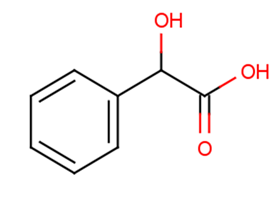
DL-Mandelic acid
CAS No. 90-64-2
DL-Mandelic acid( acidomandelico )
Catalog No. M19671 CAS No. 90-64-2
It is an isomer of cresotinic acid (2-hydroxy-3-methylbenzoic acid) and oxymethylbenzoic acid (2-methoxybenzoic acid). Derivatives of mandelic acid are formed as a result of metabolism of adrenaline and noradrenaline by monoamine oxidase and catechol-o-methyl transferase.
Purity : >98% (HPLC)
 COA
Datasheet
HNMR
HPLC
MSDS
Handing Instructions
COA
Datasheet
HNMR
HPLC
MSDS
Handing Instructions
| Size | Price / USD | Stock | Quantity |
| 1 mL x 10 mM in DMSO | 28 | In Stock |


|
| 100MG | Get Quote | In Stock |
|
| 200MG | Get Quote | In Stock |
|
| 500MG | Get Quote | In Stock |
|
| 1G | 27 | In Stock |
|
Biological Information
-
Product NameDL-Mandelic acid
-
NoteResearch use only, not for human use.
-
Brief DescriptionIt is an isomer of cresotinic acid (2-hydroxy-3-methylbenzoic acid) and oxymethylbenzoic acid (2-methoxybenzoic acid). Derivatives of mandelic acid are formed as a result of metabolism of adrenaline and noradrenaline by monoamine oxidase and catechol-o-methyl transferase.
-
DescriptionIt is an isomer of cresotinic acid (2-hydroxy-3-methylbenzoic acid) and oxymethylbenzoic acid (2-methoxybenzoic acid). Derivatives of mandelic acid are formed as a result of metabolism of adrenaline and noradrenaline by monoamine oxidase and catechol-o-methyl transferase. It is also present in certain skin care products is an intermediate molecule in the production of other biochemicals may be used as an analytical reagent and is a precursor in the manufacture of dyes. Mandelic acid is found to be associated with phenylketonuria which is an inborn error of metabolism.
-
In VitroMandelic acid ((±)-Mandelic acid) exhibits significant sperm-immobilizing effects and caused mild plasma membrane injury, suggesting that it has potential for development as a future non-surfactant spermicide.Mandelic acid, an alpha-hydroxyacid derived from the hydrolysis of an extract of bitter almonds, has been studied extensively for its possible uses in health care products, such as photoaging, irregular pigmentation, and antimicrobial.
-
In Vivo——
-
Synonymsacidomandelico
-
PathwayProteasome/Ubiquitin
-
TargetEndogenous Metabolite
-
Recptorothers
-
Research Area——
-
Indication——
Chemical Information
-
CAS Number90-64-2
-
Formula Weight152.15
-
Molecular FormulaC8H8O3
-
Purity>98% (HPLC)
-
SolubilityDMSO:10 mM
-
SMILESOC(C(O)=O)c1ccccc1
-
Chemical NameBenzeneacetic acid alpha-hydroxy-
Shipping & Storage Information
-
Storage(-20℃)
-
ShippingWith Ice Pack
-
Stability≥ 2 years
Reference
1.Strittmatter M Isenberg E Grauer M T et al. CSF substance P somatostatin and monoaminergic transmitter metabolites in patients with narcolepsy.[J]. Neuroscience Letters 1996 218(2):99-102.
molnova catalog



related products
-
7α,25-Dihydroxychole...
7α, 25-dihydroxycholesterol (7α,25-OHC) is a potent and selective agonist and endogenous ligand of the orphan GPCR receptor EBI2 (GPR183). 7α, 25-dihydroxycholesterol can serve as a chemokine directing migration of B cells, T cells and dendritic cells[1][2], and it is highly potent at activating EBI2 (EC50=140 pM; Kd=450 pM).
-
p-Toluic Acid
p-Toluic Acid belongs to the class of organic compounds known as benzoic acids. 4-Methylbenzoic acid has been primarily detected in saliva.
-
5'-Guanylic acid
5'-Guanylic acid is involved in several metabolic disorders, including AICA-ribosiduria pathway, ?adenosine deaminase deficiency,adenine phosphoribosyltransferase deficiency (aprt), and the 2-hydroxyglutric aciduria pathway.
