


 Cart
Cart
 sales@molnova.com


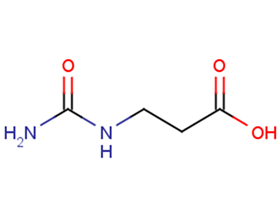
3-Ureidopropionic acid
CAS No. 462-88-4
3-Ureidopropionic acid( Ureidopropionic acid | Carbamoyl-b-alanine )
Catalog No. M19721 CAS No. 462-88-4
Ureidopropionic acid is an intermediate in the metabolism of uracil. More specifically it is a breakdown product of dihydrouracil and is produced by the enzyme dihydropyrimidase.
Purity : >98% (HPLC)
 COA
Datasheet
HNMR
HPLC
MSDS
Handing Instructions
COA
Datasheet
HNMR
HPLC
MSDS
Handing Instructions
| Size | Price / USD | Stock | Quantity |
| 1 mL x 10 mM in DMSO | 75 | In Stock |


|
| 50MG | 45 | In Stock |
|
| 100MG | 67 | In Stock |
|
| 200MG | 91 | In Stock |
|
| 500MG | Get Quote | In Stock |
|
| 1G | Get Quote | In Stock |
|
Biological Information
-
Product Name3-Ureidopropionic acid
-
NoteResearch use only, not for human use.
-
Brief DescriptionUreidopropionic acid is an intermediate in the metabolism of uracil. More specifically it is a breakdown product of dihydrouracil and is produced by the enzyme dihydropyrimidase.
-
DescriptionUreidopropionic acid is an intermediate in the metabolism of uracil. More specifically it is a breakdown product of dihydrouracil and is produced by the enzyme dihydropyrimidase. It is further decomposed to beta-alanine via the enzyme beta-ureidopropionase. Ureidopropionic acid is essentially a urea derivative of beta-alanine. High levels of Ureidopropionic acid are found in individuals with beta-ureidopropionase (UP) deficiency. Enzyme deficiencies in pyrimidine metabolism are associated with a risk for severe toxicity against the antineoplastic agent 5-fluorouracil.
-
In Vitro——
-
In Vivo——
-
SynonymsUreidopropionic acid | Carbamoyl-b-alanine
-
PathwayProteasome/Ubiquitin
-
TargetEndogenous Metabolite
-
RecptorHuman Endogenous Metabolite
-
Research Area——
-
Indication——
Chemical Information
-
CAS Number462-88-4
-
Formula Weight132.12
-
Molecular FormulaC4H8N2O3
-
Purity>98% (HPLC)
-
SolubilityDMSO:10 mM
-
SMILESNC(=O)NCCC(O)=O
-
Chemical Name——
Shipping & Storage Information
-
Storage(-20℃)
-
ShippingWith Ice Pack
-
Stability≥ 2 years
Reference
1.Brown D G Rao S Weir T L et al. Metabolomics and metabolic pathway networks from human colorectal cancers adjacent mucosa and stool[J]. Cancer & Metabolism 2016 4(1):11.
molnova catalog



related products
-
D-Glucose 6-phosphat...
D-Glucose 6-phosphate disodium salt is a compound widely present in biological systems. It is a molecule formed when glucose undergoes phosphorylation at the 6th carbon.
-
Creosol
Creosol is an agent of Antioxidant and Antibacterial.
-
Alanylphenylalanine
Alanylphenylalanine (Ala-phe) is a compound isolated from the brainstem of calves.
