


 Cart
Cart
 sales@molnova.com


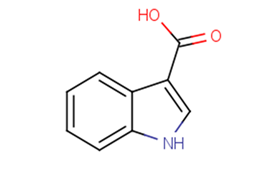
Indole-3-carboxylic acid
CAS No. 771-50-6
Indole-3-carboxylic acid( 3-Indoleformic acid )
Catalog No. M20605 CAS No. 771-50-6
Indole-3-carboxylic acid is a normal urinary indolic tryptophan metabolite .
Purity : >98% (HPLC)
 COA
Datasheet
HNMR
HPLC
MSDS
Handing Instructions
COA
Datasheet
HNMR
HPLC
MSDS
Handing Instructions
| Size | Price / USD | Stock | Quantity |
| 1 mL x 10 mM in DMSO | 42 | In Stock |


|
| 100MG | 38 | In Stock |
|
| 200MG | Get Quote | In Stock |
|
| 500MG | Get Quote | In Stock |
|
| 1G | Get Quote | In Stock |
|
Biological Information
-
Product NameIndole-3-carboxylic acid
-
NoteResearch use only, not for human use.
-
Brief DescriptionIndole-3-carboxylic acid is a normal urinary indolic tryptophan metabolite .
-
DescriptionIndole-3-carboxylic acid is a normal urinary indolic tryptophan metabolite .
-
In Vitro——
-
In Vivo——
-
Synonyms3-Indoleformic acid
-
PathwayProteasome/Ubiquitin
-
TargetEndogenous Metabolite
-
RecptorHuman Endogenous Metabolite
-
Research Area——
-
Indication——
Chemical Information
-
CAS Number771-50-6
-
Formula Weight161.16
-
Molecular FormulaC9H7NO2
-
Purity>98% (HPLC)
-
SolubilityDMSO:32 mg/mL (198.56 mM)
-
SMILESOC(=O)c1c[nH]c2ccccc12
-
Chemical Name——
Shipping & Storage Information
-
Storage(-20℃)
-
ShippingWith Ice Pack
-
Stability≥ 2 years
Reference
1.Hartmann F Freiberg E Ruge W . [Indolepatterns in the urine of liver patients].[J]. Klin Wochenschr 1962 40:721-729.
molnova catalog



related products
-
2-Hydroxybutyric aci...
2-Hydroxybutyric acid (α-Hydroxybutyric acid) is a product of protein metabolism and serves as a biomarker for type 2 diabetes and pre-eclampsia.
-
10 FTHF disodium
10 FTHF disodium (10-Formyltetrahydrofolic acid disodium) is a form of tetrahydrofolate, a formyl donor in anabolism, involved in the synthesis of purine compounds.
-
Neopterin
D-(+)-Neopterin is produced by human monocytes/macrophages upon stimulation with the cytokine interferon-γ. In humans, neopterin is involved in purine biosynthesis.
