


 Cart
Cart
 sales@molnova.com


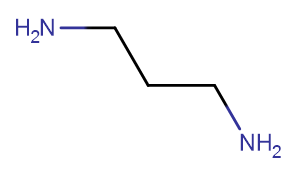
13-Diaminopropane
CAS No. 109-76-2
13-Diaminopropane( 13-Diaminopropane | 13-Propanediamine )
Catalog No. M19709 CAS No. 109-76-2
13-Diaminopropane is a common synthesis reagent used in the synthesis of cholinesterase inhibitors and thrombosis inhibitors.
Purity : >98% (HPLC)
 COA
Datasheet
HNMR
HPLC
MSDS
Handing Instructions
COA
Datasheet
HNMR
HPLC
MSDS
Handing Instructions
| Size | Price / USD | Stock | Quantity |
| 100MG | Get Quote | Get Quote |


|
| 200MG | Get Quote | Get Quote |
|
| 500MG | Get Quote | Get Quote |
|
| 1G | Get Quote | Get Quote |
|
Biological Information
-
Product Name13-Diaminopropane
-
NoteResearch use only, not for human use.
-
Brief Description13-Diaminopropane is a common synthesis reagent used in the synthesis of cholinesterase inhibitors and thrombosis inhibitors.
-
Description13-Diaminopropane is a common synthesis reagent used in the synthesis of cholinesterase inhibitors and thrombosis inhibitors.
-
In Vitro——
-
In Vivo——
-
Synonyms13-Diaminopropane | 13-Propanediamine
-
PathwayOthers
-
TargetOther Targets
-
RecptorOthers
-
Research Area——
-
Indication——
Chemical Information
-
CAS Number109-76-2
-
Formula Weight74.12
-
Molecular FormulaC3H10N2
-
Purity>98% (HPLC)
-
SolubilityDMSO:10 mM
-
SMILESNCCCN
-
Chemical Name——
Shipping & Storage Information
-
Storage(-20℃)
-
ShippingWith Ice Pack
-
Stability≥ 2 years
Reference
1.Ga V D B Muskiet F A Kingma A W et al. Simultaneous gas-chromatographic determination of free and acetyl-conjugated polyamines in urine.[J]. Clinical Chemistry 1986 32(10):1930-1937.
molnova catalog



related products
-
Apostatin-1
Apostatin-1 is a novel TRADD inhibitor. Apostatin-1 can bind to a pocket on the N-terminal TRAF2 binding domain of TRADD.
-
iso-proylFerulic aci...
Isopropyl ferulate, isolated from Notopterygium incisum, is used in the reduction of pharmaceuticals, preparation of antifungal agents, cosmetics and as antioxidant agent and so forth.
-
4-Hydroxybenzyl alco...
4-Hydroxybenzyl alcohol exhibits beneficial effects in cerebral ischemic injury, has neuroprotective effect through upregulation of Nrf2, Prdx6, and PDI expression via the PI3K/Akt pathway.
