


 Cart
Cart
 sales@molnova.com


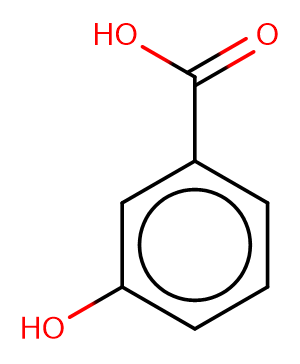
3-Hydroxybenzoic acid
CAS No. 99-06-9
3-Hydroxybenzoic acid( —— )
Catalog No. M19679 CAS No. 99-06-9
Produced in the gut microflora as one of the three main metabolites formed from the catechin diet. Its use in the production of glycol benzoates for the application of plasticizer in adhesive formulations is increasing.
Purity : >98% (HPLC)
 COA
Datasheet
HNMR
HPLC
MSDS
Handing Instructions
COA
Datasheet
HNMR
HPLC
MSDS
Handing Instructions
| Size | Price / USD | Stock | Quantity |
| 1 mL x 10 mM in DMSO | 28 | In Stock |


|
| 100MG | Get Quote | In Stock |
|
| 200MG | Get Quote | In Stock |
|
| 500MG | 35 | In Stock |
|
| 1G | Get Quote | In Stock |
|
Biological Information
-
Product Name3-Hydroxybenzoic acid
-
NoteResearch use only, not for human use.
-
Brief DescriptionProduced in the gut microflora as one of the three main metabolites formed from the catechin diet. Its use in the production of glycol benzoates for the application of plasticizer in adhesive formulations is increasing.
-
DescriptionProduced in the gut microflora as one of the three main metabolites formed from the catechin diet. Its use in the production of glycol benzoates for the application of plasticizer in adhesive formulations is increasing. It is also used in the manufacture of alkyd resins and drilling mud additive for crude oil recovery applications. It is used as a rubber polymerization activators and retardants.
-
In Vitro——
-
In Vivo——
-
Synonyms——
-
PathwayOthers
-
TargetOther Targets
-
RecptorOthers
-
Research Area——
-
Indication——
Chemical Information
-
CAS Number99-06-9
-
Formula Weight138.12
-
Molecular FormulaC7H6O3
-
Purity>98% (HPLC)
-
SolubilityDMSO:10 mM
-
SMILESOC(=O)c1cccc(O)c1
-
Chemical Name——
Shipping & Storage Information
-
Storage(-20℃)
-
ShippingWith Ice Pack
-
Stability≥ 2 years
Reference
1.Liu J H Smith P C . Direct analysis of salicylic acid salicyl acyl glucuronide salicyluric acid and gentisic acid in human plasma and urine by high-performance liquid chromatography.[J]. J Chromatogr B Biomed Appl 1996 675(1):61-70.
molnova catalog



related products
-
Quercetin 3-O-(6''-O...
Quercetin 3-O-(6''-O-galloyl)-β-D-glucoside is a natural product possessing strong inhibitory activity against the growth of Microcystis aeruginosa.
-
Amyloid β-Protein (3...
β Amyloid (3-40) is aAβ Fragment.
-
6-Methyl-3-pyridinec...
6-Methyl-3-pyridinecarboxaldehyde (6-Methoxynicotinaldehyde) has partial antitumor activity.
