


 Cart
Cart
 sales@molnova.com


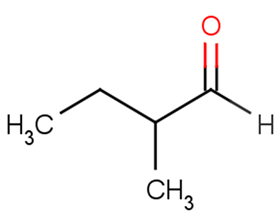
2-Methylbutyraldehyde
CAS No. 96-17-3
2-Methylbutyraldehyde( RS)-2-Methylbutanal | 2-Ethylpropanal )
Catalog No. M19674 CAS No. 96-17-3
2-Methylbutanal belongs to the class of organic compounds known as short-chain aldehydes.
Purity : >98% (HPLC)
 COA
Datasheet
HNMR
HPLC
MSDS
Handing Instructions
COA
Datasheet
HNMR
HPLC
MSDS
Handing Instructions
| Size | Price / USD | Stock | Quantity |
| 1 mL x 10 mM in DMSO | 37 | In Stock |


|
| 50MG | 45 | In Stock |
|
| 100MG | 52 | In Stock |
|
| 200MG | Get Quote | In Stock |
|
| 500MG | 104 | In Stock |
|
| 1G | 146 | In Stock |
|
Biological Information
-
Product Name2-Methylbutyraldehyde
-
NoteResearch use only, not for human use.
-
Brief Description2-Methylbutanal belongs to the class of organic compounds known as short-chain aldehydes.
-
Description2-Methylbutanal belongs to the class of organic compounds known as short-chain aldehydes.
-
In Vitro——
-
In Vivo——
-
SynonymsRS)-2-Methylbutanal | 2-Ethylpropanal
-
PathwayProteasome/Ubiquitin
-
TargetEndogenous Metabolite
-
Recptorothers
-
Research Area——
-
Indication——
Chemical Information
-
CAS Number96-17-3
-
Formula Weight86.13
-
Molecular FormulaC5H10O
-
Purity>98% (HPLC)
-
SolubilityDMSO:10 mM
-
SMILESCCC(C)C=O
-
Chemical Name——
Shipping & Storage Information
-
Storage(-20℃)
-
ShippingWith Ice Pack
-
Stability≥ 2 years
Reference
1.Yannai S . Dictionary of Food Compouds Additives Flavors and Ingredients[J]. 2004.
molnova catalog



related products
-
Coenzyme A
Coenzyme A is an obligatory cofactor in all living cells synthesized from pantothenate (Vitamin B5), adenosine triphosphate (ATP), and cysteine.
-
14-Diaminobutane
14-Diaminobutane is a GABA precursor in many biological systems and synthon for amido-ureas.
-
C20 Ceramide
C20 Ceramide (N-Arachidoyl-D-sphingosine) is a 20:0 ceramide found in the brain that crosses the blood-brain barrier to activate microglia and induce depressive-like behavior.
