


 Cart
Cart
 sales@molnova.com


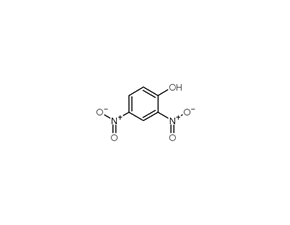
DNP
CAS No. 51-28-5
DNP( 24-Dinitrophenol )
Catalog No. M19526 CAS No. 51-28-5
24-dinitrophenol is a toxic dye chemically related to trinitrophenol (picric acid) used in biochemical studies of oxidative processes where it uncouples oxidative phosphorylation.
Purity : >98% (HPLC)
 COA
Datasheet
HNMR
HPLC
MSDS
Handing Instructions
COA
Datasheet
HNMR
HPLC
MSDS
Handing Instructions
| Size | Price / USD | Stock | Quantity |
| 100MG | Get Quote | Get Quote |


|
| 200MG | Get Quote | Get Quote |
|
| 500MG | Get Quote | Get Quote |
|
| 1G | Get Quote | Get Quote |
|
Biological Information
-
Product NameDNP
-
NoteResearch use only, not for human use.
-
Brief Description24-dinitrophenol is a toxic dye chemically related to trinitrophenol (picric acid) used in biochemical studies of oxidative processes where it uncouples oxidative phosphorylation.
-
Description24-dinitrophenol is a toxic dye chemically related to trinitrophenol (picric acid) used in biochemical studies of oxidative processes where it uncouples oxidative phosphorylation. It is also used as a metabolic stimulant.
-
In Vitro——
-
In Vivo——
-
Synonyms24-Dinitrophenol
-
PathwayOthers
-
TargetOther Targets
-
RecptorOthers
-
Research Area——
-
Indication——
Chemical Information
-
CAS Number51-28-5
-
Formula Weight184.11
-
Molecular FormulaC6H4N2O5
-
Purity>98% (HPLC)
-
SolubilityDMSO:>10 mM
-
SMILESOC1=C(C=C(C=C1)[N+]([O-])=O)[N+]([O-])=O
-
Chemical Name——
Shipping & Storage Information
-
Storage(-20℃)
-
ShippingWith Ice Pack
-
Stability≥ 2 years
Reference
1.Goldgof M et al. J Biol Chem. 2014 Jul 11;289(28):19341-50.
molnova catalog



related products
-
TRAP-6 (2-6)
FLLRN is a biological active peptide. (PAR1-specific antagonist peptide)
-
Cassyformine
Cassyformine
-
Proinsulin C-Peptide...
Proinsulin C-Peptide (31-63), porcine is a peptide fragment of the cleavage product porcine proinsulin.
