


 Cart
Cart
 sales@molnova.com


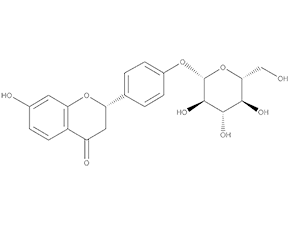
Neoliquiritin
CAS No. 5088-75-5
Neoliquiritin( —— )
Catalog No. M19441 CAS No. 5088-75-5
Neoliquiritin may possess ytotoxiciy and Tumor-specificity.
Purity : >98% (HPLC)
 COA
Datasheet
HNMR
HPLC
MSDS
Handing Instructions
COA
Datasheet
HNMR
HPLC
MSDS
Handing Instructions
| Size | Price / USD | Stock | Quantity |
| 1 mL x 10 mM in DMSO | 95 | In Stock |


|
| 5MG | 86 | In Stock |
|
| 10MG | 122 | In Stock |
|
| 25MG | 204 | In Stock |
|
| 50MG | 296 | In Stock |
|
| 100MG | Get Quote | In Stock |
|
| 200MG | Get Quote | In Stock |
|
| 500MG | Get Quote | In Stock |
|
| 1G | Get Quote | In Stock |
|
Biological Information
-
Product NameNeoliquiritin
-
NoteResearch use only, not for human use.
-
Brief DescriptionNeoliquiritin may possess ytotoxiciy and Tumor-specificity.
-
DescriptionNeoliquiritin may possess ytotoxiciy and Tumor-specificity.
-
In Vitro——
-
In Vivo——
-
Synonyms——
-
PathwayOthers
-
TargetOther Targets
-
RecptorOthers
-
Research Area——
-
Indication——
Chemical Information
-
CAS Number5088-75-5
-
Formula Weight418.4
-
Molecular FormulaC21H22O9
-
Purity>98% (HPLC)
-
SolubilityPyridine Methanol etc.:Soluble;Ethanol:Soluble;DMSO:Soluble
-
SMILESC1[C@H](OC2=C(C1=O)C=CC(=C2)O[C@H]3[C@@H]([C@H]([C@@H]([C@H](O3)CO)O)O)O)C4=CC=C(C=C4)O
-
Chemical Name(S)-2-(4-hydroxyphenyl)-7-(((2S3R4S5S6R)-345-trihydroxy-6-(hydroxymethyl)tetrahydro-2H-pyran-2-yl)oxy)chroman-4-one
Shipping & Storage Information
-
Storage(-20℃)
-
ShippingWith Ice Pack
-
Stability≥ 2 years
Reference
molnova catalog



related products
-
I-309 (human)
I-309 (human)
-
Temoporfin
Temoporfin used in photodynamic therapy for the treatment of squamous cell carcinoma of the head and neck.
-
1-O-Feruloylglucose
The herbs of Catalpa fargesii f. duclouxii.
