


 Cart
Cart
 sales@molnova.com


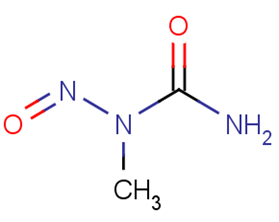
Methylnitrosourea
CAS No. 684-93-5
Methylnitrosourea( —— )
Catalog No. M19334 CAS No. 684-93-5
N-Nitroso-N-methylurea is a nitrosourea compound with alkylating, carcinogenic, and mutagenic properties.
Purity : >98% (HPLC)
 COA
Datasheet
HNMR
HPLC
MSDS
Handing Instructions
COA
Datasheet
HNMR
HPLC
MSDS
Handing Instructions
| Size | Price / USD | Stock | Quantity |
| 1 mL x 10 mM in DMSO | 43 | In Stock |


|
| 25MG | 34 | In Stock |
|
| 50MG | 45 | In Stock |
|
| 100MG | 63 | In Stock |
|
| 200MG | Get Quote | In Stock |
|
| 500MG | 184 | In Stock |
|
| 1G | 272 | In Stock |
|
Biological Information
-
Product NameMethylnitrosourea
-
NoteResearch use only, not for human use.
-
Brief DescriptionN-Nitroso-N-methylurea is a nitrosourea compound with alkylating, carcinogenic, and mutagenic properties.
-
DescriptionN-Nitroso-N-methylurea is a nitrosourea compound with alkylating, carcinogenic, and mutagenic properties.
-
In VitroN-Nitroso-N-methylurea (NMU; 5 μM) treatment increases the cellular NF-κB activity in human malignant keratinocytes. N-Nitroso-N-methylurea also increases the amount of I-κBα phosphorylation.
-
In Vivo——
-
Synonyms——
-
PathwayOthers
-
TargetOther Targets
-
RecptorOthers
-
Research Area——
-
Indication——
Chemical Information
-
CAS Number684-93-5
-
Formula Weight103.08
-
Molecular FormulaC2H5N3O2
-
Purity>98% (HPLC)
-
SolubilityIn Vitro:?DMSO : 250 mg/mL (2425.30 mM)
-
SMILESNC(=O)N(C)N=O
-
Chemical Name——
Shipping & Storage Information
-
Storage(-20℃)
-
ShippingWith Ice Pack
-
Stability≥ 2 years
Reference
1.Yoshizawa K, et al. Caspase-3 inhibitor rescues N -methyl- N -nitrosourea-induced retinal degeneration in Sprague-Dawley rats. Exp Eye Res. 2000 Dec;71(6):629-35.
molnova catalog



related products
-
Duoperone
Duoperone is a neuroleptic agent. Duoperone shows antiemetic activity in animal models.
-
m-Toluoyl chloride
m-Toluoyl chloride is a bioactive chemical.
-
Myomodulin
Myomodulin is a neuropeptide present in molluscs, insects, and gastropods.
