


 Cart
Cart
 sales@molnova.com


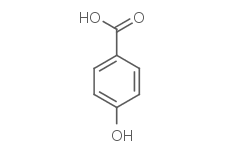
4-Hydroxybenzoic acid
CAS No. 99-96-7
4-Hydroxybenzoic acid( —— )
Catalog No. M19308 CAS No. 99-96-7
4-Hydroxybenzoic acid is a monohydroxybenzoic acid, a phenolic derivative of benzoic acid. It is a white crystalline solid that is slightly soluble in water and chloroform but more soluble in polar organic solvents such as alcohols and acetone.
Purity : >98% (HPLC)
 COA
Datasheet
HNMR
HPLC
MSDS
Handing Instructions
COA
Datasheet
HNMR
HPLC
MSDS
Handing Instructions
| Size | Price / USD | Stock | Quantity |
| 1 mL x 10 mM in DMSO | 28 | In Stock |


|
| 100MG | Get Quote | In Stock |
|
| 200MG | Get Quote | In Stock |
|
| 500MG | Get Quote | In Stock |
|
| 1G | 29 | In Stock |
|
Biological Information
-
Product Name4-Hydroxybenzoic acid
-
NoteResearch use only, not for human use.
-
Brief Description4-Hydroxybenzoic acid is a monohydroxybenzoic acid, a phenolic derivative of benzoic acid. It is a white crystalline solid that is slightly soluble in water and chloroform but more soluble in polar organic solvents such as alcohols and acetone.
-
Description4-Hydroxybenzoic acid is a monohydroxybenzoic acid, a phenolic derivative of benzoic acid. It is a white crystalline solid that is slightly soluble in water and chloroform but more soluble in polar organic solvents such as alcohols and acetone.(In Vitro):Most of the gram-positive and some gram-negative bacteria are sensitive to trans 4-Hydroxycinnamic acid (4-HBA) and 4-Hydroxybenzoic acid at IC50 concentrations of 100-170 and 160 μg/mL, respectively. The antimicrobial activities of 4-Hydroxycinnamic acid and t4-HCA against 11 food pathogenic bacteria, 6 plant pathogenic bacteria, 2 yeasts and 15 plant pathogenic fungi are tested by the paper disc method. These compounds inhibit the growth of most of the bacteria and yeasts at concentrations of 200-400 μg. However, the inhibition is more effective against most of the gram-positive bacteria. When tested by the paper disc method, 4-Hydroxycinnamic acid has stronger antimicrobial activity than t4-HCA against S. aureus, L. mesenteroides, S. cerevisiae and C. albicans at a concentration of 50 μg. However, no inhibitory effect against fungi was observed at concentrations even up to 1000 μg.
-
In VitroMost of the gram-positive and some gram-negative bacteria are sensitive to trans 4-Hydroxycinnamic acid (4-HBA) and 4-Hydroxybenzoic acid at IC50 concentrations of 100-170 and 160 μg/mL, respectively. The antimicrobial activities of 4-Hydroxycinnamic acid and t4-HCA against 11 food pathogenic bacteria, 6 plant pathogenic bacteria, 2 yeasts and 15 plant pathogenic fungi are tested by the paper disc method. These compounds inhibit the growth of most of the bacteria and yeasts at concentrations of 200-400 μg. However, the inhibition is more effective against most of the gram-positive bacteria. When tested by the paper disc method, 4-Hydroxycinnamic acid has stronger antimicrobial activity than t4-HCA against S. aureus, L. mesenteroides, S. cerevisiae and C. albicans at a concentration of 50 μg. However, no inhibitory effect against fungi was observed at concentrations even up to 1000 μg.
-
In Vivo——
-
Synonyms——
-
PathwayOthers
-
TargetOther Targets
-
RecptorOthers
-
Research AreaCancer
-
Indication——
Chemical Information
-
CAS Number99-96-7
-
Formula Weight138.12
-
Molecular FormulaC7H6O3
-
Purity>98% (HPLC)
-
SolubilityIn Vitro:?DMSO : 120 mg/mL (868.81 mM)
-
SMILESOC(=O)C1=CC=C(O)C=C1
-
Chemical Name——
Shipping & Storage Information
-
Storage(-20℃)
-
ShippingWith Ice Pack
-
Stability≥ 2 years
Reference
1. Farhoosh R, et al. Food Chem. 2016 Mar 1;194:128-34.
molnova catalog



related products
-
Maltononaose
Maltononaose is a linear oligosaccharide consisting of 9 glucose units linked by alpha-1, 4-glucoside bonds. Maltononaose is used as a substrate to study the subsites affinity of glucoamylase. Maltononaose can be used to determine the activity of amylase and to optimize the process of starch hydrolysis.
-
3,5-Dibromo-4-methox...
3,5-Dibromo-4-methoxybenzoic acid was isolated from the Malagasy sponge Amphimedon sp.
-
VK-28
VK-28 is a brain permeable iron chelator with neuroprotection. VK-28 inhibits basal as well as iron-induced mitochondrial lipid peroxidation.
