


 Cart
Cart
 sales@molnova.com


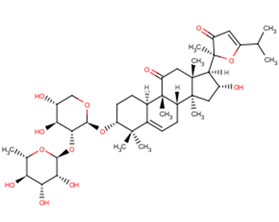
Picfeltarraenin IA
CAS No. 97230-47-2
Picfeltarraenin IA( —— )
Catalog No. M19293 CAS No. 97230-47-2
Picfeltarraenin IA, IB, IV, X, XI are stronger AChE inhibitions than the known AChE inhibitor Tacrine.
Purity : >98% (HPLC)
 COA
Datasheet
HNMR
HPLC
MSDS
Handing Instructions
COA
Datasheet
HNMR
HPLC
MSDS
Handing Instructions
| Size | Price / USD | Stock | Quantity |
| 5MG | 45 | In Stock |


|
| 10MG | 76 | In Stock |
|
| 25MG | 132 | In Stock |
|
| 50MG | 200 | In Stock |
|
| 100MG | 343 | In Stock |
|
| 200MG | Get Quote | In Stock |
|
| 500MG | Get Quote | In Stock |
|
| 1G | Get Quote | In Stock |
|
Biological Information
-
Product NamePicfeltarraenin IA
-
NoteResearch use only, not for human use.
-
Brief DescriptionPicfeltarraenin IA, IB, IV, X, XI are stronger AChE inhibitions than the known AChE inhibitor Tacrine.
-
DescriptionPicfeltarraenin IA, IB, IV, X, XI are stronger AChE inhibitions than the known AChE inhibitor Tacrine.
-
In Vitro——
-
In Vivo——
-
Synonyms——
-
PathwayOthers
-
TargetOther Targets
-
RecptorAChE
-
Research AreaOthers-Field
-
Indication——
Chemical Information
-
CAS Number97230-47-2
-
Formula Weight762.93
-
Molecular FormulaC41H62O13
-
Purity>98% (HPLC)
-
SolubilityIn Vitro:?DMSO : 100 mg/mL (131.08 mM)
-
SMILESCC1C(C(C(C(O1)OC2C(C(COC2OC3CCC4C(=CCC5C4(C(=O)CC6(C5(CC(C6C7(C(=O)C=C(O7)C(C)C)C)O)C)C)C)C3(C)C)O)O)O)O)O
-
Chemical Name——
Shipping & Storage Information
-
Storage(-20℃)
-
ShippingWith Ice Pack
-
Stability≥ 2 years
Reference
molnova catalog



related products
-
Azetidine-2-carboxyl...
Azetidine-2-carboxylic acid is a non proteinogenic amino acid homologue of proline found in common beets. Azetidine-2-carboxylic acid can be misincorporated into proteins in place of proline in many species including humans. It is a toxic and teratogenic agent.
-
24-epi-24-O-acetyl-7...
The roots of Cimicifuga foetida L.
-
cis-3-Hexen-1-ol
Cis-3-Hexen-1-ol (Leaf alcohol) is an aroma compound which typically described as "green grassy" or the smell of "cut grass".
