


 Cart
Cart
 sales@molnova.com


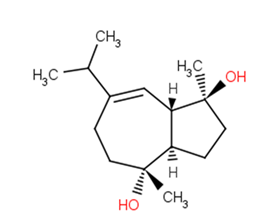
Alismoxide
CAS No. 87701-68-6
Alismoxide( —— )
Catalog No. M19213 CAS No. 87701-68-6
Alismoxide has anti-inflammatory effects.
Purity : >98% (HPLC)
 COA
Datasheet
HNMR
HPLC
MSDS
Handing Instructions
COA
Datasheet
HNMR
HPLC
MSDS
Handing Instructions
| Size | Price / USD | Stock | Quantity |
| 1 mL x 10 mM in DMSO | 62 | In Stock |


|
| 2MG | 32 | In Stock |
|
| 5MG | 52 | In Stock |
|
| 10MG | 73 | In Stock |
|
| 25MG | 124 | In Stock |
|
| 50MG | 179 | In Stock |
|
| 100MG | Get Quote | In Stock |
|
| 200MG | Get Quote | In Stock |
|
| 500MG | Get Quote | In Stock |
|
| 1G | Get Quote | In Stock |
|
Biological Information
-
Product NameAlismoxide
-
NoteResearch use only, not for human use.
-
Brief DescriptionAlismoxide has anti-inflammatory effects.
-
DescriptionAlismoxide has anti-inflammatory effects.
-
In Vitro——
-
In Vivo——
-
Synonyms——
-
PathwayGPCR/G Protein
-
TargetCannabinoid Receptor
-
RecptorOthers
-
Research AreaOthers-Field
-
Indication——
Chemical Information
-
CAS Number87701-68-6
-
Formula Weight238.37
-
Molecular FormulaC15H26O2
-
Purity>98% (HPLC)
-
SolubilityIn Vitro:?DMSO : ≥ 31 mg/mL (130.05 mM)
-
SMILESCC(C)C1=CC2C(CCC2(C)O)C(CC1)(C)O
-
Chemical Name——
Shipping & Storage Information
-
Storage(-20℃)
-
ShippingWith Ice Pack
-
Stability≥ 2 years
Reference
molnova catalog



related products
-
CB1/2 agonist 3
CB1/2 agonist 3 is a competitive and potent CB1/CB2 agonist with high affinity for hCB1 and hCB2 and can be used to study neurological disorders.
-
Fatostatin
Fatostatin ia an inhibitor of sterol regulatory element binding protein (SREBP). It impairs the activation of SREBP-1 and SREBP-2.
-
GW405833 hydrochlori...
A potent, selective cannabinoid receptor CB2 agonist with Ki of 3.6 nM, 1200-fold selectivity over CB1.
