


 Cart
Cart
 sales@molnova.com


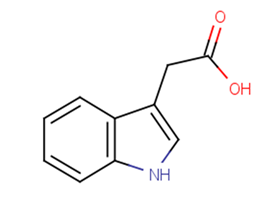
Indole-3-acetic acid
CAS No. 87-51-4
Indole-3-acetic acid( Indoleacetic acid | Heteroauxin | Hexteroauxin | Rhizopin )
Catalog No. M19209 CAS No. 87-51-4
Indole-3-acetic acid (IAA) is the most common plant hormone of the auxin class and it regulates various aspects of plant growth and development.
Purity : >98% (HPLC)
 COA
Datasheet
HNMR
HPLC
MSDS
Handing Instructions
COA
Datasheet
HNMR
HPLC
MSDS
Handing Instructions
| Size | Price / USD | Stock | Quantity |
| 1 mL x 10 mM in DMSO | 43 | In Stock |


|
| 100MG | Get Quote | In Stock |
|
| 200MG | Get Quote | In Stock |
|
| 500MG | 38 | In Stock |
|
| 1G | Get Quote | In Stock |
|
Biological Information
-
Product NameIndole-3-acetic acid
-
NoteResearch use only, not for human use.
-
Brief DescriptionIndole-3-acetic acid (IAA) is the most common plant hormone of the auxin class and it regulates various aspects of plant growth and development.
-
DescriptionIndoleacetic acid is used to apply as a plant growth hormone. It is an inducer of plant cell elongation and division shown to cause uncontrolled growth.
-
In Vitro——
-
In Vivo——
-
SynonymsIndoleacetic acid | Heteroauxin | Hexteroauxin | Rhizopin
-
PathwayOthers
-
TargetOther Targets
-
RecptorOthers
-
Research Area——
-
Indication——
Chemical Information
-
CAS Number87-51-4
-
Formula Weight175.18
-
Molecular FormulaC10H9NO2
-
Purity>98% (HPLC)
-
SolubilityDMSO : ≥ 30 mg/mL; 171.25 mM
-
SMILESC1=CC=C2C(=C1)C(=CN2)CC(=O)O
-
Chemical Name1H-Indole-3-acetic acid
Shipping & Storage Information
-
Storage(-20℃)
-
ShippingWith Ice Pack
-
Stability≥ 2 years
Reference
molnova catalog



related products
-
Tiadinil
Tiadinil a plant activator of systemic acquired resistance boosts the production of herbivore-induced plant volatiles.
-
Leucopyrokinin (LPK)
Leucopyrokinin (LPK)
-
Cardine
Visnadine is a useful organic compound for research related to life sciences.
