


 Cart
Cart
 sales@molnova.com


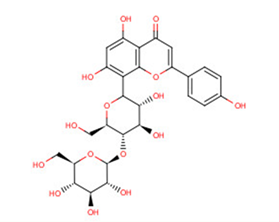
glucosylvitexin
CAS No. 76135-82-5
glucosylvitexin( —— )
Catalog No. M19085 CAS No. 76135-82-5
Glucosylvitexin inhibits TPO activity.
Purity : >98% (HPLC)
 COA
Datasheet
HNMR
HPLC
MSDS
Handing Instructions
COA
Datasheet
HNMR
HPLC
MSDS
Handing Instructions
| Size | Price / USD | Stock | Quantity |
| 1 mL x 10 mM in DMSO | 48 | In Stock |


|
| 5MG | 73 | In Stock |
|
| 10MG | 103 | In Stock |
|
| 25MG | 170 | In Stock |
|
| 50MG | 247 | In Stock |
|
| 100MG | Get Quote | In Stock |
|
| 200MG | Get Quote | In Stock |
|
| 500MG | Get Quote | In Stock |
|
| 1G | Get Quote | In Stock |
|
Biological Information
-
Product Nameglucosylvitexin
-
NoteResearch use only, not for human use.
-
Brief DescriptionGlucosylvitexin inhibits TPO activity.
-
DescriptionGlucosylvitexin inhibits TPO activity.
-
In Vitro——
-
In Vivo——
-
Synonyms——
-
PathwayEndocrinology/Hormones
-
Target5-HT Receptor
-
RecptorTPO
-
Research AreaMetabolic Disease
-
Indication——
Chemical Information
-
CAS Number76135-82-5
-
Formula Weight610.52
-
Molecular FormulaC27H30O16
-
Purity>98% (HPLC)
-
SolubilityIn Vitro:?DMSO : 250 mg/mL (409.49 mM)
-
SMILESc1(cc(=O)c2c(cc(c(c2o1)C1O[C@@H]([C@H]([C@@H]([C@H]1O)O)O[C@@H]1O[C@@H]([C@H]([C@@H]([C@H]1O)O)O)CO)CO)O)O)c1ccc(cc1)O
-
Chemical Name——
Shipping & Storage Information
-
Storage(-20℃)
-
ShippingWith Ice Pack
-
Stability≥ 2 years
Reference
1. Gaitan E,et al. Antithyroid and goitrogenic effects of millet: role of C-glycosylflavones. J Clin Endocrinol Metab. 1989 Apr;68(4):707-14.
molnova catalog



related products
-
Amitriptyline hydroc...
Amitriptyline Hydrochloride is a dibenzocycloheptene-derivative tricyclic antidepressant (TCA).
-
Thioridazine hydroch...
Thioridazine is an antipsychotic drug, used in the treatment of schizophrenia and psychosis, shows D4 selectivity or serotonin antagonism.
-
Niaprazine
Niaprazine is a histamine H1-receptor antagonist with marked sedative properties.
