


 Cart
Cart
 sales@molnova.com


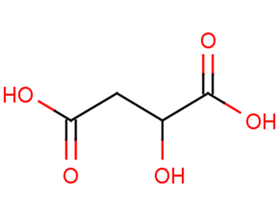
Malic acid
CAS No. 6915-15-7
Malic acid( E 296 | FDA 2018 | Hydroxybutanedioic acid )
Catalog No. M19003 CAS No. 6915-15-7
Malic acid supplementation may be useful for conservative treatment of calcium renal stone disease by virtue of its capacity to induce these effects.
Purity : >98% (HPLC)
 COA
Datasheet
HNMR
HPLC
MSDS
Handing Instructions
COA
Datasheet
HNMR
HPLC
MSDS
Handing Instructions
| Size | Price / USD | Stock | Quantity |
| 1 mL x 10 mM in DMSO | 28 | In Stock |


|
| 100MG | Get Quote | In Stock |
|
| 200MG | Get Quote | In Stock |
|
| 500MG | 35 | In Stock |
|
| 1G | Get Quote | In Stock |
|
Biological Information
-
Product NameMalic acid
-
NoteResearch use only, not for human use.
-
Brief DescriptionMalic acid supplementation may be useful for conservative treatment of calcium renal stone disease by virtue of its capacity to induce these effects.
-
DescriptionMalic acid did reduce populations of L. monocytogenes on poultry. Malic acid supplementation may be useful for conservative treatment of calcium renal stone disease by virtue of its capacity to induce these effects.
-
In Vitro——
-
In Vivo——
-
SynonymsE 296 | FDA 2018 | Hydroxybutanedioic acid
-
PathwayOthers
-
TargetOther Targets
-
RecptorOthers
-
Research AreaOthers-Field
-
Indication——
Chemical Information
-
CAS Number6915-15-7
-
Formula Weight134.08
-
Molecular FormulaC4H6O5
-
Purity>98% (HPLC)
-
SolubilityIn Vitro:?DMSO : 100 mg/mL (745.77 mM)
-
SMILESC(C(C(=O)O)O)C(=O)O
-
Chemical Name——
Shipping & Storage Information
-
Storage(-20℃)
-
ShippingWith Ice Pack
-
Stability≥ 2 years
Reference
molnova catalog



related products
-
Pentadecanoic acid
Pentadecylic acid is a saturated fatty acid with a 15-carbon backbone.
-
AF-1
AF1 Neuropeptide, known as a sequenced bioactive neuropeptide, was seperated from the nematode Ascaris suum.
-
β-Casomorphin (1-6),...
β-Casomorphin (1-6), bovine is a opioid-like bioactive peptide of β-Casomorphin.
