


 Cart
Cart
 sales@molnova.com


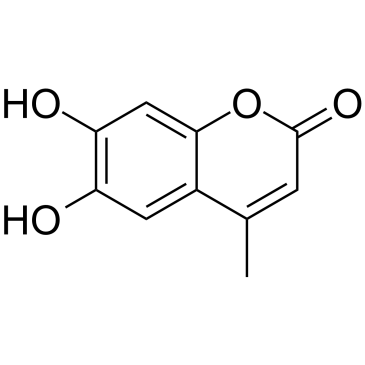
4-Methylesculetin
CAS No. 529-84-0
4-Methylesculetin( —— )
Catalog No. M18742 CAS No. 529-84-0
4-methylesculetin is one of the coumarin derivatives with great anti-oxidant and anti-inflammatory activities.
Purity : >98% (HPLC)
 COA
Datasheet
HNMR
HPLC
MSDS
Handing Instructions
COA
Datasheet
HNMR
HPLC
MSDS
Handing Instructions
| Size | Price / USD | Stock | Quantity |
| 1 mL x 10 mM in DMSO | 42 | In Stock |


|
| 50MG | 28 | In Stock |
|
| 100MG | 37 | In Stock |
|
| 200MG | Get Quote | In Stock |
|
| 500MG | 86 | In Stock |
|
| 1G | 124 | In Stock |
|
Biological Information
-
Product Name4-Methylesculetin
-
NoteResearch use only, not for human use.
-
Brief Description4-methylesculetin is one of the coumarin derivatives with great anti-oxidant and anti-inflammatory activities.
-
Description4-methylesculetin is one of the coumarin derivatives with great anti-oxidant and anti-inflammatory activities.
-
In Vitro——
-
In Vivo——
-
Synonyms——
-
PathwayImmunology/Inflammation
-
TargetNOS
-
RecptorAntioxidant
-
Research Area——
-
Indication——
Chemical Information
-
CAS Number529-84-0
-
Formula Weight192.17
-
Molecular FormulaC10H8O4
-
Purity>98% (HPLC)
-
SolubilityIn Vitro:?DMSO : 50 mg/mL (260.19 mM)
-
SMILESCC1=CC(=O)OC2=CC(=C(C=C12)O)O
-
Chemical Name——
Shipping & Storage Information
-
Storage(-20℃)
-
ShippingWith Ice Pack
-
Stability≥ 2 years
Reference
molnova catalog



related products
-
ZL-006
ZL-006 (ZL 006, ZL006) is a brain penetrant small molecule inhibitor of PSD-95/nNOS interaction that prevents glutamate-induced excitotoxicity and cerebral ischemic damage in vivo.
-
FK-330 dihydrate
FK-330 dihydrate (FR-260330 dihydrate) is a novel and effective nitric oxide synthase inhibitor. It can prevent ischemia and reperfusion injury in rat liver transplantation.
-
BYK191023 dihydrochl...
BYK191023 dihydrochloride (BYK-191023) is a potent, highly selective inhibitor of inducible nitric-oxide synthase (iNOS) with IC50 of 86 nM.
