


 Cart
Cart
 sales@molnova.com


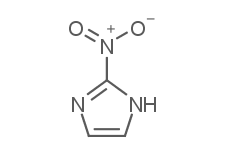
Azomycin
CAS No. 527-73-1
Azomycin( 2-Nitroimidazole )
Catalog No. M18736 CAS No. 527-73-1
Azomycin is an antimicrobial antibiotic produced by a strain of Nocardia mesenterica.
Purity : >98% (HPLC)
 COA
Datasheet
HNMR
HPLC
MSDS
Handing Instructions
COA
Datasheet
HNMR
HPLC
MSDS
Handing Instructions
| Size | Price / USD | Stock | Quantity |
| 100MG | Get Quote | In Stock |


|
| 200MG | Get Quote | In Stock |
|
| 500MG | 26 | In Stock |
|
| 1G | Get Quote | In Stock |
|
Biological Information
-
Product NameAzomycin
-
NoteResearch use only, not for human use.
-
Brief DescriptionAzomycin is an antimicrobial antibiotic produced by a strain of Nocardia mesenterica.
-
DescriptionAzomycin is an antimicrobial antibiotic produced by a strain of Nocardia mesenterica.
-
In VitroAzomycin is an antibiotic which can be active against aerobic Gram-positive and Gram-negative bacteria. It is found that Azomycin is also active against a variety of anaerobic bacteria.
-
In Vivo——
-
Synonyms2-Nitroimidazole
-
PathwayOthers
-
TargetOther Targets
-
RecptorOthers
-
Research AreaInfection
-
Indication——
Chemical Information
-
CAS Number527-73-1
-
Formula Weight113.07
-
Molecular FormulaC3H3N3O2
-
Purity>98% (HPLC)
-
SolubilityDMSO : 160 mg/mL 1415.05 mM
-
SMILES[O-][N+](=O)C1=NC=CN1
-
Chemical Name——
Shipping & Storage Information
-
Storage(-20℃)
-
ShippingWith Ice Pack
-
Stability≥ 2 years
Reference
1.Kumar P, Emami S, McEwan AJ, Wiebe LI.Bioorg Med Chem Lett. 2008 Jun 1;18(11):3256-60.
molnova catalog



related products
-
(S,R,S)-AHPC-C4-NH2 ...
(S,R,S)-AHPC-C4-NH2 hydrochloride is a synthesized E3 ligase ligand-linker conjugate incorporating the (S,R,S)-AHPC based VHL ligand and a linker.
-
Benzofuran-2-carboxy...
Compound Fr13623 is a useful organic compound for research related to life sciences.
-
Khellin
A vasodilator that also has bronchodilatory action.
