


 Cart
Cart
 sales@molnova.com


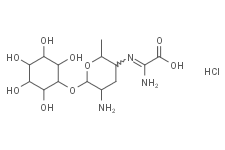
Kasugamycin hydrochloride
CAS No. 19408-46-9
Kasugamycin hydrochloride( —— )
Catalog No. M18185 CAS No. 19408-46-9
Kasugamycin (Ksg) is an aminoglycoside antibiotic that was originally isolated in 1965, from Streptomyces kasugaensis, a Streptomyces strain found near the Kasuga shrine in Nara, Japan.
Purity : >98% (HPLC)
 COA
Datasheet
HNMR
HPLC
MSDS
Handing Instructions
COA
Datasheet
HNMR
HPLC
MSDS
Handing Instructions
| Size | Price / USD | Stock | Quantity |
| 50MG | 36 | In Stock |


|
| 100MG | 51 | In Stock |
|
| 200MG | Get Quote | In Stock |
|
| 500MG | 124 | In Stock |
|
| 1G | Get Quote | In Stock |
|
Biological Information
-
Product NameKasugamycin hydrochloride
-
NoteResearch use only, not for human use.
-
Brief DescriptionKasugamycin (Ksg) is an aminoglycoside antibiotic that was originally isolated in 1965, from Streptomyces kasugaensis, a Streptomyces strain found near the Kasuga shrine in Nara, Japan.
-
DescriptionKasugamycin (Ksg) is an aminoglycoside antibiotic that was originally isolated in 1965, from Streptomyces kasugaensis, a Streptomyces strain found near the Kasuga shrine in Nara, Japan. Kasugamycin was discovered by Hamao Umezawa, who also discovered kanamycin and bleomycin, as a drug which could prevent growth of a fungus causing rice blast disease.
-
In Vitro——
-
In Vivo——
-
Synonyms——
-
PathwayCell Cycle/DNA Damage
-
TargetAChR
-
RecptorAntifungle
-
Research Area——
-
Indication——
Chemical Information
-
CAS Number19408-46-9
-
Formula Weight415.83
-
Molecular FormulaC14H26ClN3O9
-
Purity>98% (HPLC)
-
SolubilityIn Vitro:?DMSO : 8.33 mg/mL (20.03 mM)
-
SMILESC[C@@H]1[C@H](C[C@@H]([C@H](O1)O[C@H]1[C@@H]([C@H]([C@H]([C@@H]([C@@H]1O)O)O)O)O)N)NC(=N)C(=O)O.Cl
-
Chemical Name——
Shipping & Storage Information
-
Storage(-20℃)
-
ShippingWith Ice Pack
-
Stability≥ 2 years
Reference
1. Schluenzen F, et al. Nat. Struct. Mol. Biol. 13, 871–878.
molnova catalog



related products
-
Biricodar dicitrate
Biricodar dicitrate (VX-710) is a potent MDR inhibitor with no anticancer activity and can be used to study prostate cancer.
-
Pipecuronium bromide
Pipecuronium bromide (RGH-1106) is a selective and potent nAChR antagonist that also acts as a non-depolarising steroidal neuromuscular blocker, causing muscle relaxation, often in conjunction with antibiotics.
-
Tarafenacin D-tartra...
Tarafenacin D-tartrate (SVT-40776 D-tartrate) is a selective and potent muscarinic acetylcholine M3 receptor antagonist used in the study of overactive bladder and bronchial disorders.
