


 Cart
Cart
 sales@molnova.com


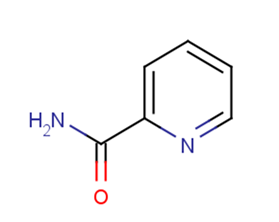
Picolinamide
CAS No. 1452-77-3
Picolinamide( —— )
Catalog No. M18028 CAS No. 1452-77-3
Picolinamide is found to be a strong inhibitor of poly (ADP-ribose) synthetase of nuclei from rat pancreatic islet cells.
Purity : >98% (HPLC)
 COA
Datasheet
HNMR
HPLC
MSDS
Handing Instructions
COA
Datasheet
HNMR
HPLC
MSDS
Handing Instructions
| Size | Price / USD | Stock | Quantity |
| 1 mL x 10 mM in DMSO | 28 | In Stock |


|
| 100MG | Get Quote | In Stock |
|
| 200MG | Get Quote | In Stock |
|
| 500MG | Get Quote | In Stock |
|
| 1G | 27 | In Stock |
|
Biological Information
-
Product NamePicolinamide
-
NoteResearch use only, not for human use.
-
Brief DescriptionPicolinamide is found to be a strong inhibitor of poly (ADP-ribose) synthetase of nuclei from rat pancreatic islet cells.
-
DescriptionPicolinamide is found to be a strong inhibitor of poly (ADP-ribose) synthetase of nuclei from rat pancreatic islet cells.
-
In VitroPicolinamide (10 μM-1 mM) inhibits Poly(ADP-ribose) synthetase activity.Picolinamide (2 mM) protects against streptozotocin-induced depression of proinsulin synthesis in isolated pancreatic islets of rats.
-
In VivoPicolinamide (4 mmol/kg, i.p., rats) inhibits Na+/phosphate cotransport by isolated renal brush border membrane vesicles.Picolinamide (250 mg/kg, i.p., rats) enhances the tumorigenic effect of Streptozotocin and Alloxan on islet B-cells. Animal Model:Rats Dosage:4 mmol/kg Administration:Intraperitoneal injection (i.p.)Result:Increased renal cortical NAD content (1.5 fold).
-
Synonyms——
-
PathwayOthers
-
TargetOther Targets
-
RecptorPARP
-
Research AreaCancer
-
Indication——
Chemical Information
-
CAS Number1452-77-3
-
Formula Weight122.12
-
Molecular FormulaC6H6N2O
-
Purity>98% (HPLC)
-
SolubilityIn Vitro:?H2O : 100 mg/mL (818.87 mM)
-
SMILESC1=CC=NC(=C1)C(=O)N
-
Chemical Name——
Shipping & Storage Information
-
Storage(-20℃)
-
ShippingWith Ice Pack
-
Stability≥ 2 years
Reference
molnova catalog



related products
-
(R)-ZINC-3573
(R)-ZINC-3573 is a potent and highly selective MRGPRX2 probe that activates endogenous MRGPRX2 in a human mast cell line, inducing degranulation and calcium release.
-
ACTH (1-4)
Acth (1-4) is the ACTH N-terminal tetrapeptide.
-
ML382
ML382 is a potent and selective MrgX1 positive allosteric modulator(EC50 : 190 nM).ML382 enhances the ability of BAM8-22 to inhibit high-voltage-activated Ca2+ channels and attenuate spinal nociceptive transmission, both BAM8-22 and ML382 effectively attenuated evoked, persistent, and spontaneous pain without causing obvious side effects.?
