


 Cart
Cart
 sales@molnova.com


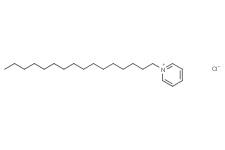
Cetylpyridinium Chloride
CAS No. 123-03-5
Cetylpyridinium Chloride( Cetylpyridinium chloride | NSC 14864 )
Catalog No. M17896 CAS No. 123-03-5
Cetylpyridinium chloride is a cationic quaternary ammonium compound used as oropharyngeal antiseptic.
Purity : >98% (HPLC)
 COA
Datasheet
HNMR
HPLC
MSDS
Handing Instructions
COA
Datasheet
HNMR
HPLC
MSDS
Handing Instructions
| Size | Price / USD | Stock | Quantity |
| 100MG | Get Quote | In Stock |


|
| 200MG | Get Quote | In Stock |
|
| 500MG | 38 | In Stock |
|
| 1G | Get Quote | In Stock |
|
Biological Information
-
Product NameCetylpyridinium Chloride
-
NoteResearch use only, not for human use.
-
Brief DescriptionCetylpyridinium chloride is a cationic quaternary ammonium compound used as oropharyngeal antiseptic.
-
DescriptionCetylpyridinium chloride is a Germicide, Bactericide, and Disinfectant.(In Vitro):Cetylpyridinium chloride interacts with dimeric viral nucleocapsid protein (known as core protein or HBcAg) specifically. Compared with other HBV inhibitors, Cetylpyridinium chloride achieves significantly better reduction of HBV particle number in HepG2.2.15 cell line. Cetylpyridinium chloride inhibits capsid assembly and leads to reduced HBV biogenesis.Cetylpyridinium chloride is a safe antimicrobial agent with broad-spectrum activity for preventing biofilm formation and gingivitis.(In Vivo):Cetylpyridinium chloride (30 μg/kg; intramuscular injection; daily; for 3 days; male C57BL/6 mice) treatment inhibits HBV replication in mouse hydrodynamic model system.
-
In VitroCetylpyridinium chloride interacts with dimeric viral nucleocapsid protein (known as core protein or HBcAg) specifically. Compared with other HBV inhibitors, Cetylpyridinium chloride achieves significantly better reduction of HBV particle number in HepG2.2.15 cell line. Cetylpyridinium chloride inhibits capsid assembly and leads to reduced HBV biogenesis.Cetylpyridinium chloride is a safe antimicrobial agent with broad-spectrum activity for preventing biofilm formation and gingivitis.
-
In VivoCetylpyridinium chloride (30 μg/kg; intramuscular injection; daily; for 3 days; male C57BL/6 mice) treatment inhibits HBV replication in mouse hydrodynamic model system. Animal Model:Male C57BL/6 mice (6-week old) injected with the plasmid Dosage:272?μg/kg/day Administration:Intramuscular injection; daily; for 3 days Result:Suppressed serum HBV DNA levels, decreased by 60% in day2 and 45% in day3 compared to the control.
-
SynonymsCetylpyridinium chloride | NSC 14864
-
PathwayAngiogenesis
-
TargetJAK
-
RecptorOthers
-
Research AreaInfection
-
Indication——
Chemical Information
-
CAS Number123-03-5
-
Formula Weight339.99
-
Molecular FormulaC21H38N·Cl
-
Purity>98% (HPLC)
-
SolubilityIn Vitro:?Ethanol : 100 mg/mL (294.13 m)
-
SMILES[Cl-].CCCCCCCCCCCCCCCC[N+]1=CC=CC=C1
-
Chemical NameCetylpyridinium chloride
Shipping & Storage Information
-
Storage(-20℃)
-
ShippingWith Ice Pack
-
Stability≥ 2 years
Reference
1. Pitten FA, et al. Arzneimittelforschung. 2001, 51(7), 588-595.
molnova catalog



related products
-
Fosifidancitinib
Fosifidancitinib is a potent inhibitor of JAK 1 and JAK 3.
-
Londamocitinib
Londamocitinib (JAK1-IN-7) is a selective and potent JAK1 inhibitor with anti-inflammatory activity.
-
Tyk2-IN-30
TYK2-IN-30 is a potent, selective and orally active Tyk2 inhibitor with Ki of 0.7 nM.
