


 Cart
Cart
 sales@molnova.com


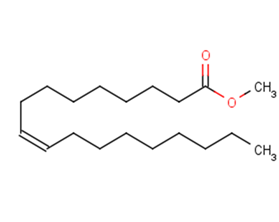
Methyl Oleate
CAS No. 112-62-9
Methyl Oleate( —— )
Catalog No. M17828 CAS No. 112-62-9
Methyl Oleate is an unsaturated high fatty acid ester, an important chemical raw material, widely used in the preparation of surfactants, leather additives, textile additives, as well as insecticide additives.
Purity : >98% (HPLC)
 COA
Datasheet
HNMR
HPLC
MSDS
Handing Instructions
COA
Datasheet
HNMR
HPLC
MSDS
Handing Instructions
| Size | Price / USD | Stock | Quantity |
| 1 mL x 10 mM in DMSO | 28 | In Stock |


|
| 100MG | Get Quote | In Stock |
|
| 200MG | Get Quote | In Stock |
|
| 500MG | Get Quote | In Stock |
|
| 1G | 27 | In Stock |
|
Biological Information
-
Product NameMethyl Oleate
-
NoteResearch use only, not for human use.
-
Brief DescriptionMethyl Oleate is an unsaturated high fatty acid ester, an important chemical raw material, widely used in the preparation of surfactants, leather additives, textile additives, as well as insecticide additives.
-
DescriptionMethyl Oleate is an unsaturated high fatty acid ester, an important chemical raw material, widely used in the preparation of surfactants, leather additives, textile additives, as well as insecticide additives.
-
In Vitro——
-
In Vivo——
-
Synonyms——
-
PathwayMAPK/ERK Signaling
-
Targetp38 MAPK
-
RecptorOthers
-
Research Area——
-
Indication——
Chemical Information
-
CAS Number112-62-9
-
Formula Weight296.49
-
Molecular FormulaC19H36O2
-
Purity>98% (HPLC)
-
SolubilityIn Vitro:?DMSO : 100 mg/mL (337.28 mM)
-
SMILESCCCCCCCCC=CCCCCCCCC(=O)OC
-
Chemical Name——
Shipping & Storage Information
-
Storage(-20℃)
-
ShippingWith Ice Pack
-
Stability≥ 2 years
Reference
molnova catalog



related products
-
R1487
R1487 is an orally bioavailable and highly selective p38α mitogen-activated protein kinase inhibitor.
-
EAI045
EAI045, an allosteric inhibitor, targets towards drug-resistant EGFR mutants but avoids the wild-type receptor.
-
HS-276
HS-276 is a highly selective, orally active inhibitor of TAK1 (Ki: 2.5 nM). HS-276 significantly inhibits TAK1 (IC50: 8.25 nM), CLK2 (IC50: 29 nM), GCK (IC50: 22 nM), ULK2 (IC50: 63 nM), MAP4K5 (IC50. HS-276 can be used to study rheumatoid arthritis (RA).
