


 Cart
Cart
 sales@molnova.com


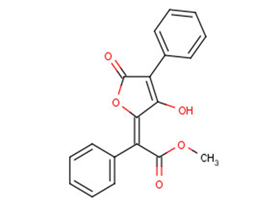
Vulpinic Acid
CAS No. 521-52-8
Vulpinic Acid( —— )
Catalog No. M17532 CAS No. 521-52-8
Vulpinic Acid is a lichen metabolite with anti-inflammatory, antibacteria, properties, plant growth inhibitor.
Purity : >98% (HPLC)
 COA
Datasheet
HNMR
HPLC
MSDS
Handing Instructions
COA
Datasheet
HNMR
HPLC
MSDS
Handing Instructions
| Size | Price / USD | Stock | Quantity |
| 10MG | 29 | In Stock |


|
| 25MG | 44 | In Stock |
|
| 50MG | 63 | In Stock |
|
| 100MG | 93 | In Stock |
|
| 200MG | 136 | In Stock |
|
| 500MG | Get Quote | In Stock |
|
| 1G | Get Quote | In Stock |
|
Biological Information
-
Product NameVulpinic Acid
-
NoteResearch use only, not for human use.
-
Brief DescriptionVulpinic Acid is a lichen metabolite with anti-inflammatory, antibacteria, properties, plant growth inhibitor.
-
DescriptionVulpinic Acid is a lichen metabolite with anti-inflammatory, antibacteria, properties, plant growth inhibitor.
-
In Vitro——
-
In Vivo——
-
Synonyms——
-
PathwayCell Cycle/DNA Damage
-
TargetDNA/RNA Synthesis
-
RecptorOthers
-
Research Area——
-
Indication——
Chemical Information
-
CAS Number521-52-8
-
Formula Weight322.32
-
Molecular FormulaC19H14O5
-
Purity>98% (HPLC)
-
SolubilityIn Vitro:?DMSO : 25 mg/mL (77.57 mM)
-
SMILESCOC(=O)/C(=C/1\C(=C(C(=O)O1)c1ccccc1)O)/c1ccccc1
-
Chemical Name——
Shipping & Storage Information
-
Storage(-20℃)
-
ShippingWith Ice Pack
-
Stability≥ 2 years
Reference
1. Koparal AT., et at. Anti-angiogenic and antiproliferative properties of the lichen substances (-)-usnic acid and vulpinic acid. Z Naturforsch C. 2015;70(5-6):159-64.
molnova catalog



related products
-
Daptomycin
Daptomycin is a novel antibiotic with rapid in vitro bactericidal activity against gram-positive organisms.
-
CX-3543
CX-3543 (Quarfloxin, Itarnafloxin) is a small molecule nucleolus-targeting agent that selectively disrupts nucleolin/rDNA G-quadruplex complexes in the nucleolus.
-
Fludarabine Phosphat...
Fludarabine Phosphate is an analogue of adenosine and deoxyadenosine, which is able to compete with dATP for incorporation into DNA and inhibit DNA synthesis.
