


 Cart
Cart
 sales@molnova.com


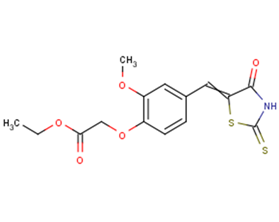
IMR-1
CAS No. 310456-65-6
IMR-1( IMR-1 | IMR 1 | IMR1. Inhibitor of Mastermind Recruitment-1 )
Catalog No. M17472 CAS No. 310456-65-6
IMR-1 is a novel class of Notch inhibitors targeting the transcriptional activation with IC50 of 6 μMol/L.
Purity : >98% (HPLC)
 COA
Datasheet
HNMR
HPLC
MSDS
Handing Instructions
COA
Datasheet
HNMR
HPLC
MSDS
Handing Instructions
| Size | Price / USD | Stock | Quantity |
| 1 mL x 10 mM in DMSO | 50 | In Stock |


|
| 5MG | 29 | In Stock |
|
| 10MG | 46 | In Stock |
|
| 25MG | 98 | In Stock |
|
| 50MG | 174 | In Stock |
|
| 100MG | 286 | In Stock |
|
| 200MG | 414 | In Stock |
|
| 500MG | Get Quote | In Stock |
|
| 1G | Get Quote | In Stock |
|
Biological Information
-
Product NameIMR-1
-
NoteResearch use only, not for human use.
-
Brief DescriptionIMR-1 is a novel class of Notch inhibitors targeting the transcriptional activation with IC50 of 6 μMol/L.
-
DescriptionIMR-1 is a Mastermind Recruitment inhibitor. IMR-1 disrupted the recruitment of Mastermind-like 1 to the Notch transcriptional activation complex on chromatin, thereby attenuating Notch target gene transcription. IMR-1 inhibited the growth of Notch-dependent cell lines and significantly abrogated the growth of patient-derived tumor xenografts.
-
In Vitro——
-
In VivoAnimal Model:Nude mouses with adenocarcinoma xenograft.Dosage:15mg/kg Administration:I.p.; for 28 days Result:Blocks tumor establishment.
-
SynonymsIMR-1 | IMR 1 | IMR1. Inhibitor of Mastermind Recruitment-1
-
PathwayOthers
-
TargetOther Targets
-
RecptorNotch
-
Research AreaCancer
-
Indication——
Chemical Information
-
CAS Number310456-65-6
-
Formula Weight353.41
-
Molecular FormulaC15H15NO5S2
-
Purity>98% (HPLC)
-
SolubilityDMSO : ≥ 100 mg/mL 282.96 mM; H2O : < 0.1 mg/mL
-
SMILESC(=O)(COc1c(cc(cc1)/C=C/1\SC(=S)NC1=O)OC)OCC
-
Chemical Name(E)-Ethyl 2-(2-methoxy-4-((4-oxo-2-thioxothiazolidin-5-ylidene)methyl)phenoxy)acetate
Shipping & Storage Information
-
Storage(-20℃)
-
ShippingWith Ice Pack
-
Stability≥ 2 years
Reference
1.Astudillo L, et al. Cancer Res. 2016, 76(12):3593-603.
molnova catalog



related products
-
Micromarin F
Micromarin F is a coumarin derivative extracted from the stems of Micromelum minutum Wight et Arn.
-
NY-BR-1 p904 A2
T-cell clones specific for this NY-BR-1 epitope (p904) can recognize breast tumor cells expressing NY-BR-1.
-
Hemsloside Ma3
Hemsloside Ma3
