


 Cart
Cart
 sales@molnova.com


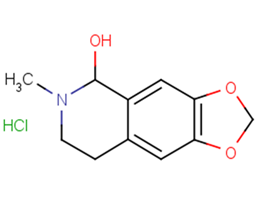
Hydrastinine hydrochloride
CAS No. 4884-68-8
Hydrastinine hydrochloride( —— )
Catalog No. M19418 CAS No. 4884-68-8
Hydrastinine hydrochloride is a semisynthetic alkaloid from the hydrolysis of the alkaloid Hydrastine used as a haemostatic drug.
Purity : >98% (HPLC)
 COA
Datasheet
HNMR
HPLC
MSDS
Handing Instructions
COA
Datasheet
HNMR
HPLC
MSDS
Handing Instructions
| Size | Price / USD | Stock | Quantity |
| 10MG | 90 | In Stock |


|
| 25MG | 162 | In Stock |
|
| 50MG | 279 | In Stock |
|
| 100MG | 459 | In Stock |
|
| 200MG | Get Quote | In Stock |
|
| 500MG | Get Quote | In Stock |
|
| 1G | Get Quote | In Stock |
|
Biological Information
-
Product NameHydrastinine hydrochloride
-
NoteResearch use only, not for human use.
-
Brief DescriptionHydrastinine hydrochloride is a semisynthetic alkaloid from the hydrolysis of the alkaloid Hydrastine used as a haemostatic drug.
-
DescriptionHydrastinine hydrochloride is a semisynthetic alkaloid from the hydrolysis of the alkaloid Hydrastine used as a haemostatic drug.
-
In VitroGoldenseal has been used for the treatment of a wide variety of ailments including gastrointestinal disturbances, urinary tract disorders, and inflammation. The five major alkaloid constituents in goldenseal are Berberine, Palmatine, Hydrastine, Hydrastinine, and Canadine.
-
In Vivo——
-
Synonyms——
-
PathwayOthers
-
TargetOther Targets
-
RecptorOthers
-
Research Area——
-
Indication——
Chemical Information
-
CAS Number4884-68-8
-
Formula Weight225.67
-
Molecular FormulaC11H12ClNO2
-
Purity>98% (HPLC)
-
SolubilityWater:10 mM
-
SMILESCN1CCC2=CC3=C(C=C2C1O)OCO3.Cl
-
Chemical Name——
Shipping & Storage Information
-
Storage(-20℃)
-
ShippingWith Ice Pack
-
Stability≥ 2 years
Reference
1.POE CF JOHNSON CC. Acta Pharmacol Toxicol (Copenh). 1954; 10(4):338-46.
molnova catalog



related products
-
4-Chlorosalicylic ac...
Antimicrobial compositions comprising a benzoic acid analog and a metal salt.
-
Tyroserleutide
Tyroserleutide (YSL), isolated from the degradation products of porcine spleen, is a small molecular tripeptide which inhibits tumor growth both in vitro and in vivo.
-
25-PYRIDINEDICARBOXY...
25-Pyridinedicarboxylic Acid is used in the preparation of new derivatives as antiviral agents.
