


 Cart
Cart
 sales@molnova.com


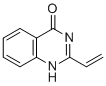
STIMA 1
CAS No. 91634-12-7
STIMA 1( STIMA1 )
Catalog No. M16581 CAS No. 91634-12-7
STIMA 1 is a small molecule mutant p53 reactivator that can stimulate mutant p53 DNA binding in vitro.
Purity : >98% (HPLC)
 COA
Datasheet
HNMR
HPLC
MSDS
Handing Instructions
COA
Datasheet
HNMR
HPLC
MSDS
Handing Instructions
| Size | Price / USD | Stock | Quantity |
| 5MG | 42 | Get Quote |


|
| 10MG | 59 | Get Quote |
|
| 25MG | 87 | Get Quote |
|
| 50MG | 164 | Get Quote |
|
| 100MG | 248 | Get Quote |
|
| 200MG | Get Quote | Get Quote |
|
| 500MG | Get Quote | Get Quote |
|
| 1G | Get Quote | Get Quote |
|
Biological Information
-
Product NameSTIMA 1
-
NoteResearch use only, not for human use.
-
Brief DescriptionSTIMA 1 is a small molecule mutant p53 reactivator that can stimulate mutant p53 DNA binding in vitro.
-
DescriptionSTIMA 1 is a small molecule mutant p53 reactivator that can stimulate mutant p53 DNA binding in vitro, induces expression of p53 target proteins and triggers apoptosis in mutant p53-expressing human tumor cells.
-
In Vitro——
-
In Vivo——
-
SynonymsSTIMA1
-
PathwayApoptosis
-
TargetMDM2-p53
-
RecptorMDM2-p53
-
Research Area——
-
Indication——
Chemical Information
-
CAS Number91634-12-7
-
Formula Weight172.187
-
Molecular FormulaC10H8N2O
-
Purity>98% (HPLC)
-
SolubilityIn Vitro:?DMSO : 250 mg/mL (1451.97 mM)
-
SMILESC=CC1=NC2=CC=CC=C2C(=O)N1
-
Chemical Name2-ethenyl-1H-quinazolin-4-one
Shipping & Storage Information
-
Storage(-20℃)
-
ShippingWith Ice Pack
-
Stability≥ 2 years
Reference
1. Zache N, et al. Mol Oncol. 2008 Jun;2(1):70-80.
2. Bykov VJ, et al. FEBS Lett. 2014 Aug 19;588(16):2622-7.
molnova catalog



related products
-
UNC-2170 maleate
A small molecule ligand for the methyl-lysine binding protein 53BP1 (p53-binding protein 1) with Kd of 22 uM against the 53BP1 tandem tudor domain.
-
CP-31398 dihydrochlo...
CP-31398 is a small molecule p53 reactivator that protects p53 from thermal denaturation.
-
MB710
MB710 is a small-molecule p53 mutant Y220C stabilizer, binds tightly to the Y220C pocket and stabilizes p53-Y220C in vitro.
